Practical guidance for living healthier, aging well, and becoming more of who you want to be.


Geocaching is a worldwide treasure-hunting hobby in which participants use coordinates and clues to find hidden containers called caches. The prize is usually the satisfaction of finding the location and signing the log—not taking something valuable.
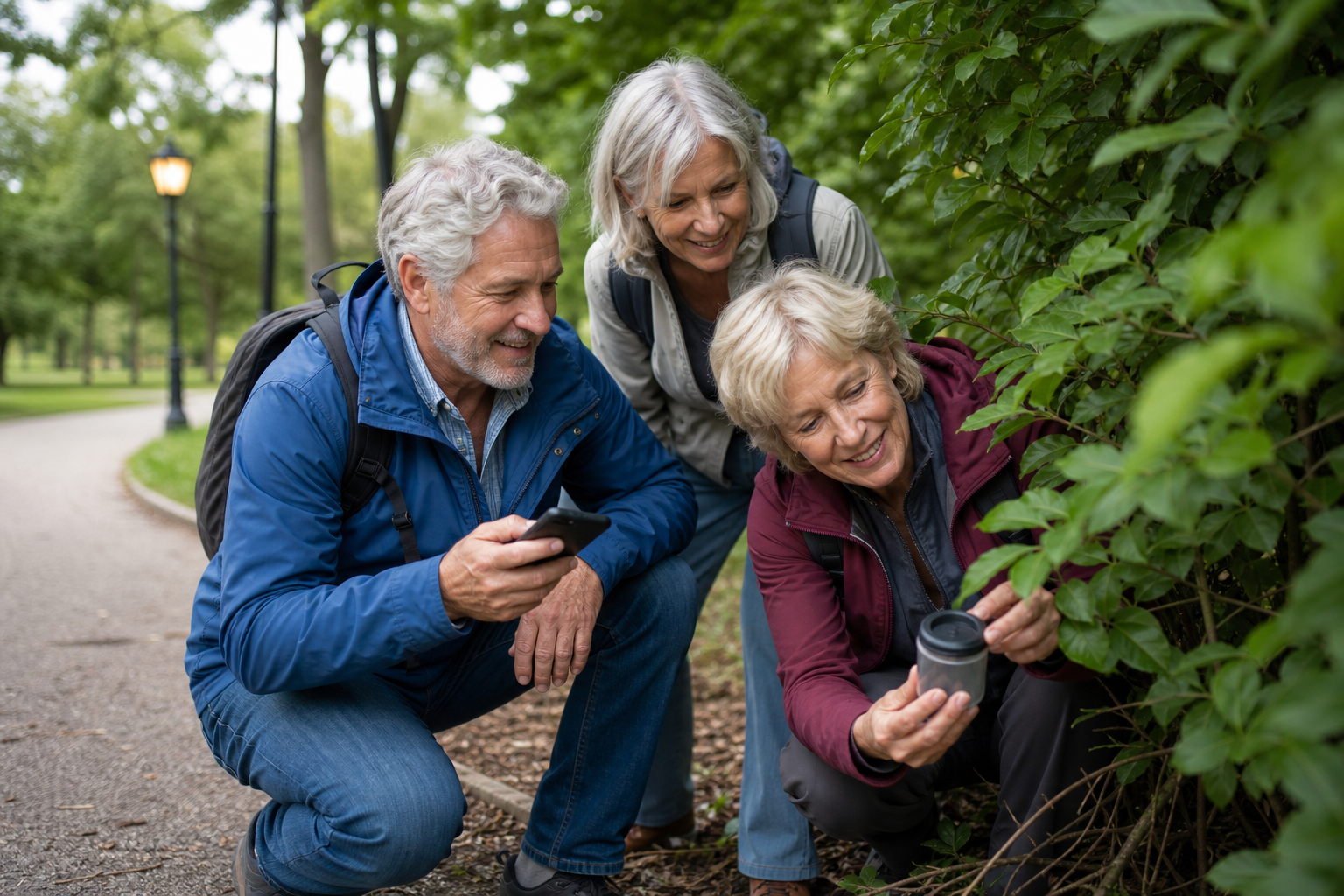
Because caches exist in parks, neighborhoods, historic districts, and trails, the hobby can be adjusted to many interests and energy levels. It turns “let’s take a walk” into “let’s see if we can find it.”
Begin with an easy, recent cache
Use a reputable geocaching app or website and filter for a low difficulty and terrain rating. Read the description, recent activity logs, parking information, and accessibility notes.
Choose a cache that has been found recently. Several recent “did not find” reports may mean the container is missing or the location has changed.
Go with another person first
A companion makes navigation, uneven ground, and unfamiliar locations easier. Tell someone where you are going and when you expect to return. Download the map or take a screenshot in case cellular service is weak.
Bring a charged phone, water, sun protection, weather layers, identification, and any necessary medication. For a trail cache, add appropriate footwear and a simple first-aid kit.
The coordinates are only the beginning
GPS accuracy varies, especially under trees, near buildings, or in valleys. When you are close, stop staring at the screen and look for something that appears slightly out of place: a hollow log, a magnetic container, or an object described by the clue.
Do not climb, reach into spaces you cannot see, cross barriers, or disturb plants and structures. A legitimate cache should not require trespassing or damaging the environment.
Practice good cache etiquette
Be discreet around people who are not participating. Open the container carefully, sign the log, and return it exactly where and how you found it.
If you take a trade item, leave something of equal or greater value. Never place food, medicine, weapons, alcohol, or unsafe objects in a cache. Do not post a photograph that reveals the exact hiding place.
Make the outing fit your mobility
Terrain ratings are useful but subjective. Review maps, elevation, surface, benches, restrooms, and recent comments. City caches and paved park paths can provide the puzzle without a rugged hike.
Use a walking aid or trekking poles if they are already appropriate for you, and turn back when conditions do not match the description. Finding the cache is optional; returning safely is not.
Build a social version
Invite family members, neighbors, or a walking group. One person can navigate, another can read clues, and another can search. Community events allow beginners to meet experienced participants without needing to find a difficult cache first.
Create themed outings: historic markers, public art, waterfront parks, or a new town. Add lunch or coffee so the hobby becomes a regular social date.
Keep the first goal small
Choose one or two nearby caches and allow plenty of time. A “did not find” is part of the hobby, not a failure. The real reward is noticing a place you might otherwise have walked past.
Geocaching adds curiosity to movement. With a safe location, a charged phone, and a willingness to look closely, an ordinary afternoon can become a small expedition.
Sources
- National Institute on Aging, Participating in Activities You Enjoy as You Age: https://www.nia.nih.gov/health/participating-activities-you-enjoy
- National Park Service, Hike Smart: https://www.nps.gov/articles/hiking-safety.htm
This article provides general educational information. Follow local rules and posted closures.
Where to Find This Activity Near You
Use your city, state, or ZIP code on the sites below to find nearby facilities, groups, classes, and events:
Before attending, confirm the current schedule, cost, accessibility, beginner level, equipment needs, and cancellation policy directly with the organizer. More to Become does not operate or endorse individual groups or events.