
Practical guidance for living healthier, aging well, and becoming more of who you want to be.


You do not need to memorize a leading role to become part of community theater. Every production depends on people who sew, build, organize, greet, paint, find props, manage tickets, run lights, and keep rehearsals moving.
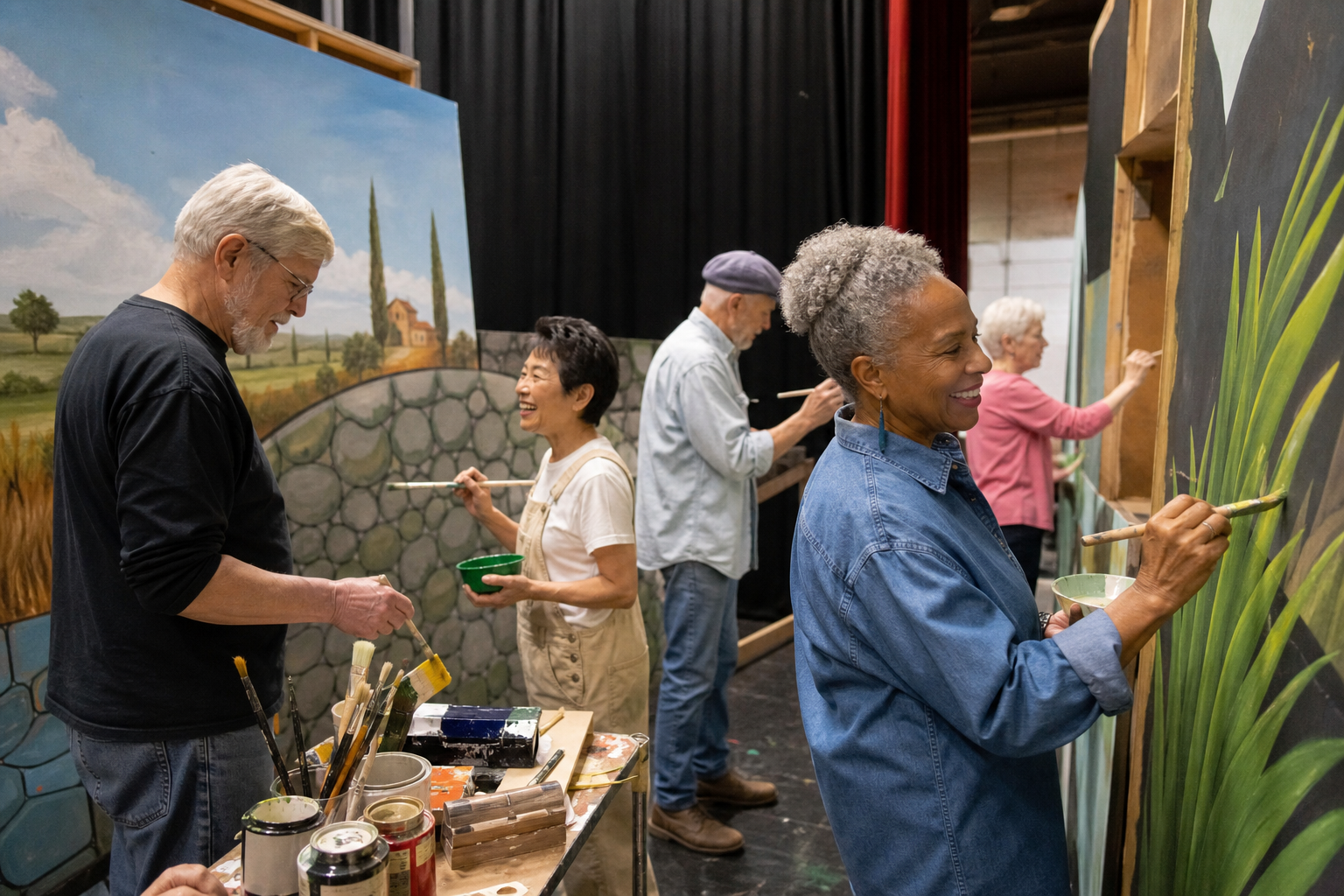
That variety makes theater an unusually flexible hobby. It can be creative, social, physical, technical, or all four. Research reviewed by the National Institute on Aging suggests that participatory arts—including theater—show promise for supporting quality of life, self-esteem, cognitive function, and social interaction.
Choose your kind of contribution
Onstage roles include acting, singing, dancing, and ensemble work. Behind the scenes, opportunities may include:
- Costumes and alterations
- Props and set decoration
- Painting and light construction
- Lighting or sound operation
- Stage management
- Box office and ushering
- Publicity and photography
- Rehearsal hospitality
Ask what a typical week looks like. Some roles require several evenings for months; others concentrate work during performance week or allow flexible volunteer shifts.
Start without an audition
Attend a performance, open house, volunteer orientation, or set-building day. Introduce yourself and ask what the group needs now. Reliability is often more valuable than prior theater experience.
If you want to act, begin with a staged reading, ensemble role, or short community production. Read the audition notice carefully and ask whether you must prepare a monologue or song.
Match the role to your energy
Backstage work can involve stairs, darkness, cables, lifting, and quick changes. Set construction may require tools and paint. Acting can involve long rehearsals and standing.
Ask about seating, breaks, lighting, noise, parking, and physical tasks before committing. Choose a role that leaves enough energy to enjoy the process. It is better to perform one responsibility dependably than to accept three and feel overwhelmed.
Make rehearsal easier
Use a large-print script, highlighter, notebook, water bottle, and calendar. Record blocking and deadlines immediately. If hearing is difficult, sit where you can see the director and ask for written updates.
Practice lines in short sessions and connect each line to the action or cue before it. For technical work, request hands-on training and written checklists.
Respect safety and boundaries
Follow the theater’s rules for ladders, power tools, electrical systems, rigging, and emergency exits. Do not take on specialized work without training. Wear closed-toe shoes during construction and rehearsals where scenery moves.
Theater communities work best when expectations are clear. Ask how conflicts, intimacy, photographs, personal information, and accessibility requests are handled.
Give yourself one production
The first production teaches the culture of the group: how people communicate, how late rehearsals run, and whether the environment feels respectful. After closing night, decide what you would like more—or less—of next time.
Community theater creates something rare: a temporary team with a visible shared result. Whether you speak the final line or make sure the right chair reaches the stage, your work becomes part of the story.
Sources
- National Institute on Aging, Participating in the Arts Creates Paths to Healthy Aging: https://www.nia.nih.gov/news/participating-arts-creates-paths-healthy-aging
- National Institute on Aging, Participating in Activities You Enjoy as You Age: https://www.nia.nih.gov/health/participating-activities-you-enjoy
This article provides general educational information.
Where to Find This Activity Near You
Use your city, state, or ZIP code on the sites below to find nearby facilities, groups, classes, and events:
- AACT — Find state and regional community-theater contacts
- VolunteerMatch — Search for arts and theater volunteer roles
- Meetup — Find acting, improv, and theater groups
Before attending, confirm the current schedule, cost, accessibility, beginner level, equipment needs, and cancellation policy directly with the organizer. More to Become does not operate or endorse individual groups or events.