
Practical guidance for living healthier, aging well, and becoming more of who you want to be.


Eating well with type 2 diabetes does not require complicated recipes or a different menu every day. A practical plan starts with balanced portions, regular meals, and familiar foods you genuinely enjoy.
The CDC’s plate method offers a simple guide: fill half of a 9-inch plate with non-starchy vegetables, one quarter with lean protein, and one quarter with carbohydrate foods such as whole grains, beans, fruit, or starchy vegetables. Individual carbohydrate needs vary, so use this seven-day plan as a flexible starting point—not a prescription.
Important: This article provides general nutrition information and does not replace individualized advice from a doctor, registered dietitian, or diabetes educator. Meal timing and carbohydrate needs may need adjustment if you use insulin or medicine that can cause low blood sugar. People with kidney disease, swallowing difficulties, food allergies, or other medical conditions should request personalized guidance.
Simple Principles for the Week
- Build lunch and dinner around the diabetes plate method.
- Eat meals at reasonably consistent times.
- Pair carbohydrate foods with protein, healthy fat, or fiber.
- Choose water or an unsweetened beverage instead of sugary drinks.
- Use low-sodium products when available.
- Include protein throughout the day to support strength and muscle health.
- Cook once and intentionally use leftovers to reduce cost and effort.
- Choose softer foods or cook vegetables longer when chewing is difficult.
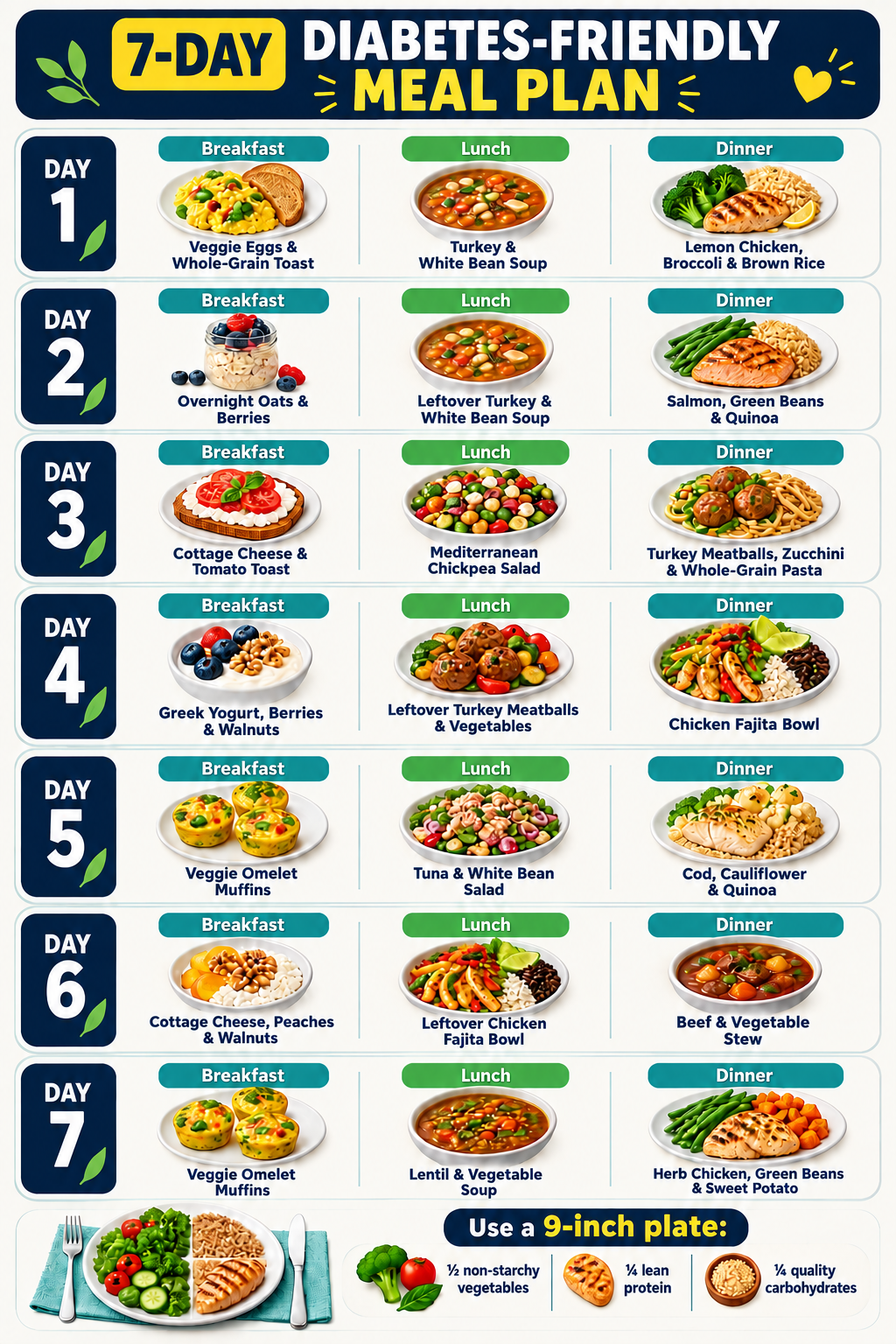
The 7-Day Meal Plan
Day 1
- Breakfast: Veggie and cheese scrambled eggs with one slice of whole-grain toast
- Lunch: Turkey and white bean soup
- Dinner: Lemon chicken, roasted broccoli, and a small serving of brown rice
- Optional snack: Apple slices with peanut butter
Day 2
- Breakfast: Overnight oats with cinnamon and berries
- Lunch: Leftover turkey and white bean soup
- Dinner: Baked salmon, garlic green beans, and quinoa
- Optional snack: Plain Greek yogurt
Day 3
- Breakfast: Whole-grain toast with cottage cheese and tomato
- Lunch: Mediterranean chickpea salad
- Dinner: Turkey meatballs with zucchini and whole-grain pasta
- Optional snack: A small handful of unsalted almonds
Day 4
- Breakfast: Greek yogurt with berries, walnuts, and cinnamon
- Lunch: Leftover turkey meatballs and vegetables
- Dinner: Sheet-pan chicken fajita bowl
- Optional snack: Celery or soft-cooked carrots with hummus
Day 5
- Breakfast: Two veggie omelet muffins
- Lunch: Tuna and white bean salad
- Dinner: Baked cod, roasted cauliflower, and quinoa
- Optional snack: A small orange or clementine
Day 6
- Breakfast: Cottage cheese with peaches and walnuts
- Lunch: Leftover chicken fajita bowl
- Dinner: Slow-cooker beef and vegetable stew
- Optional snack: Whole-grain crackers with cheese
Day 7
- Breakfast: Leftover veggie omelet muffins
- Lunch: Lentil and vegetable soup
- Dinner: Herb-roasted chicken thighs with green beans and a small sweet potato
- Optional snack: Plain Greek yogurt with berries
A snack is optional rather than mandatory. Whether you need one may depend on hunger, activity, medication, and your healthcare team’s recommendations.
Five Easy Recipes for the Week
1. Overnight Oats With Cinnamon and Berries
Serves 1
- ½ cup old-fashioned rolled oats
- ¾ cup unsweetened milk or fortified soy beverage
- 2 tablespoons plain Greek yogurt
- 1 teaspoon chia seeds
- ½ teaspoon cinnamon
- ½ cup berries
Combine the oats, milk, yogurt, chia seeds, and cinnamon in a covered container. Refrigerate overnight and add the berries before eating. For an easier-to-chew texture, allow the oats to soften for at least eight hours.
2. Turkey and White Bean Soup
Serves 4
- ½ pound lean ground turkey
- 1 can no-salt-added white beans, drained and rinsed
- 1 can no-salt-added diced tomatoes
- 1 diced carrot
- 1 diced celery stalk
- ½ diced onion
- 4 cups low-sodium chicken broth
- 1 teaspoon Italian seasoning
- 2 cups chopped spinach
Cook the turkey and onion in a large pot until the turkey is fully cooked. Add the beans, tomatoes, carrot, celery, broth, and seasoning. Simmer for about 20 minutes, then add the spinach and cook until tender. Refrigerate one portion for the following day and freeze extra servings.
3. Mediterranean Chickpea Salad
Serves 2
- 1 can chickpeas, drained and rinsed
- 1 small cucumber, diced
- 1 cup halved cherry tomatoes
- ¼ cup crumbled feta
- 1 tablespoon olive oil
- 1 tablespoon lemon juice
- Oregano and black pepper
Combine all the ingredients and divide the salad into two portions. For a softer texture, lightly mash some of the chickpeas and peel the cucumber before chopping it. Beans contain carbohydrates as well as protein and fiber, so consider them when planning the carbohydrate portion of the meal.
4. Sheet-Pan Chicken Fajita Bowls
Serves 2
- 2 boneless, skinless chicken thighs, thinly sliced
- 1 bell pepper, sliced
- 1 small onion, sliced
- 1 tablespoon olive oil
- 1 teaspoon cumin
- ½ teaspoon mild chili powder
- 1 cup cooked brown rice
- ½ avocado
Heat the oven to 400°F (200°C). Toss the chicken and vegetables with the oil and seasonings. Roast for 20–25 minutes, or until the chicken reaches 165°F (74°C). Divide the chicken and vegetables between two bowls. Add ½ cup of brown rice and one-quarter of the avocado to each bowl. Save one portion for lunch on Day 6.
5. Veggie Omelet Muffins
Makes 8 muffins; serving size: 2 muffins
- 8 eggs
- ½ cup chopped spinach
- ½ cup finely diced bell pepper
- ¼ cup diced tomato
- ¼ cup shredded cheese
- Black pepper or a salt-free seasoning blend
Heat the oven to 350°F (175°C) and lightly grease eight muffin cups. Whisk the eggs, then divide the vegetables and cheese among the cups. Pour in the egg and bake for 18–20 minutes, until completely set. Refrigerate promptly and use within three to four days. Reheat until hot before serving.
One Grocery List, Several Meals
Use frozen vegetables and berries when convenient to reduce preparation and waste. Choose products without sugary sauces or heavy seasoning. Keep versatile staples such as eggs, chicken, fish, plain yogurt, cottage cheese, beans, lentils, rolled oats, brown rice, quinoa, whole-grain bread, low-sodium broth, olive oil, nuts, and seasonal produce on hand.
Adjust the Plan to Fit Your Needs
Blood sugar responses differ from person to person. Pay attention to your readings when instructed by your healthcare team, particularly when trying a new breakfast or changing carbohydrate portions.
Do not skip meals or sharply reduce carbohydrates without professional guidance if you take insulin or medication that can cause hypoglycemia. If food costs, poor appetite, dental problems, or difficulty cooking make eating well challenging, tell your healthcare provider. A registered dietitian or diabetes education program can help adapt a plan to your health, budget, culture, and daily routine.
The goal is not a perfect week. It is a manageable pattern you can repeat: balanced plates, familiar ingredients, planned leftovers, and fewer last-minute food decisions.