Practical guidance for living healthier, aging well, and becoming more of who you want to be.


Aging well doesn’t require turning your life upside down.
You don’t need a perfect diet, a complicated morning routine, or an expensive collection of supplements. In fact, some of the habits most consistently associated with better health as we age are surprisingly ordinary.
They’re the things we do repeatedly: how much we move, what we eat most often, how well we sleep, whether we stay connected to other people, and how we care for our bodies over time.
The goal isn’t to stop aging. It’s to help ourselves stay strong, capable, curious, and independent for as long as possible.
Here are seven simple habits worth building into everyday life.
1. Move More Throughout the Day
Exercise matters, but movement doesn’t only happen at the gym.
Walking the dog, taking the stairs, gardening, cleaning the house, stretching while watching television, or getting up from your desk regularly all count toward a more active day.
As we get older, regular physical activity becomes especially important for maintaining cardiovascular health, mobility, balance, and independence.
And you don’t have to suddenly become an athlete.
If you’ve been mostly sedentary, start small. A short walk after dinner or ten minutes of movement in the morning is far more useful than an ambitious workout plan you abandon after a week.
Try this: Add one extra 10-minute walk to your day.
Small amounts of movement have a funny habit of becoming bigger ones.

2. Protect Your Muscle
When people think about healthy aging, they often think about heart health or weight. Muscle deserves a place much higher on that list.
We naturally tend to lose muscle mass and strength as we age, particularly if we’re inactive. Strength training can help preserve both.
That doesn’t necessarily mean lifting enormous weights.
Bodyweight exercises, resistance bands, light dumbbells, and everyday movements such as squats or carrying groceries can all help challenge your muscles.
Aim to make strengthening activities a regular part of your week, while choosing exercises appropriate for your fitness level and physical abilities.
Think of muscle as part of your independence account.
Every little deposit matters.
3. Build Meals Around Foods That Actually Nourish You
Healthy eating can become unnecessarily complicated.
One week a food is supposedly miraculous. The next week someone on the internet tells you never to eat it again.
Instead of chasing every new nutrition trend, focus on the broader pattern of what you eat.
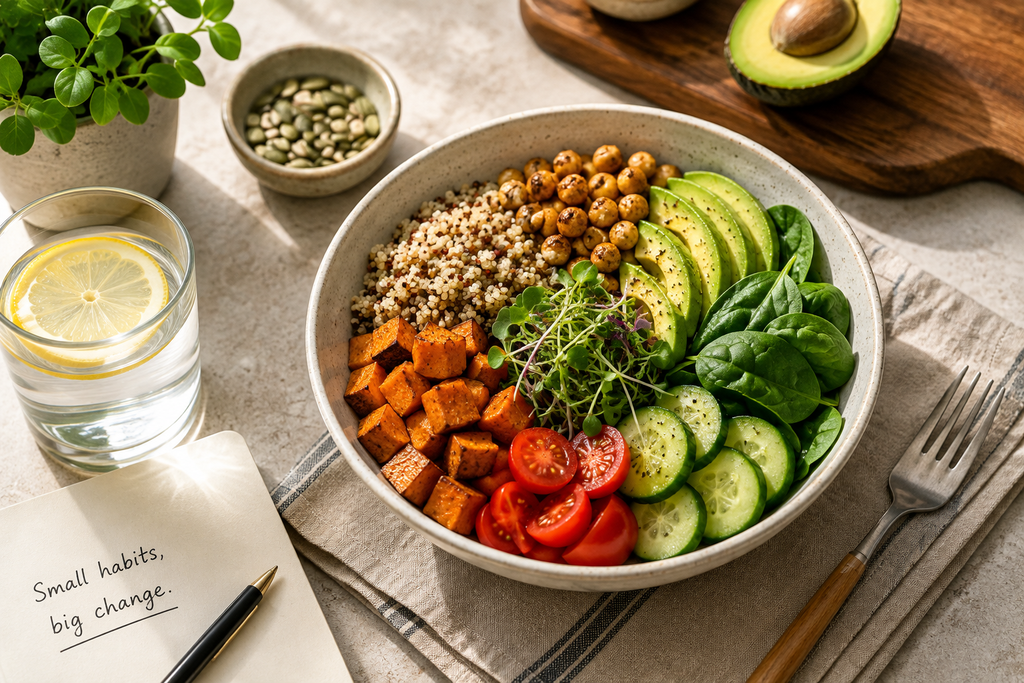
Build more meals around vegetables and fruits, whole grains, beans and legumes, nuts and seeds, and good sources of protein. Fish and other minimally processed foods can also fit naturally into a balanced eating pattern.
You don’t need to eat perfectly.
A useful question before a meal is simply:
“What can I add that would make this meal a little more nutritious?”
Maybe it’s berries with breakfast, vegetables with lunch, beans in a soup, or a handful of nuts instead of another highly processed snack.
Adding something beneficial often feels much easier than constantly thinking about restriction.
4. Treat Sleep Like Maintenance, Not Lost Time
Sleep is sometimes the first thing we sacrifice when life gets busy.
But our bodies don’t regard sleep as wasted time.
Sleep supports numerous processes involved in physical and mental health, and consistently getting too little sleep can make everything from exercise to healthy eating feel harder.
A good sleep routine doesn’t have to be elaborate.
Try keeping your bedtime and wake time reasonably consistent, making your bedroom comfortable and dark, and giving yourself a little distance from stimulating activities before bed.
And if sleep problems are persistent or significantly affect your daily life, they’re worth discussing with a healthcare professional rather than simply accepting them as part of getting older.
5. Stay Connected to Other People

Healthy aging isn’t only about what happens inside the body.
Human connection matters too.
Friendships, family relationships, neighbors, community groups, volunteering, hobbies, and even small regular interactions can help keep us socially engaged.
You don’t need a huge social circle.
Sometimes it’s one friend you regularly call, a weekly coffee with someone you enjoy, a walking group, or simply making the effort to stay involved in the world around you.
Social connection is easy to overlook because it doesn’t look like a traditional “health habit.”
It is one.
6. Give Your Brain New Things to Do
Your brain likes more than crossword puzzles.
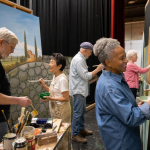
Learning something unfamiliar, playing an instrument, reading, traveling somewhere new, cooking a new recipe, learning another language, taking a class, making art, or figuring out a piece of technology you’ve been avoiding can all challenge your brain in different ways.
The activity itself matters less than staying engaged.
Curiosity gives us a particularly nice advantage here:
There is no age limit on being a beginner.
Instead of asking, “Am I too old to learn this?” try asking, “What would be interesting to learn next?”
That small change in perspective can open quite a few doors.

7. Stop Trying to Do Everything Perfectly
This may be the most important habit on the list.
Healthy living isn’t an all-or-nothing project.
Missing a workout doesn’t erase the walks you took last week. Eating dessert doesn’t cancel a nutritious lunch. Staying up too late one night doesn’t mean your sleep routine has failed.
What matters is the pattern that develops over months and years.
Choose habits that are realistic enough to survive busy days, vacations, bad moods, deadlines, and ordinary life.
Because the healthiest routine isn’t necessarily the most impressive one.
It’s the one you can keep returning to.
You Don’t Need a New Life. Start With the One You Have.
There is an enormous industry built around convincing us that aging well requires another product, another program, another complicated protocol.
Most of us can start somewhere much simpler.
Take a walk.
Use your muscles.
Put something nourishing on your plate.
Protect your sleep.
Call someone you care about.
Learn something that interests you.
Then wake up tomorrow and do a few of those things again.
Healthy aging isn’t about desperately trying to remain the person you were twenty years ago.
It’s about taking care of the person you are today, while giving your future self the best chance to keep doing the things that make life worth living.
You don’t have to overhaul your life. You just have to keep building it.
More To Become
Better health. Smarter living. A life that keeps evolving.