
Practical guidance for living healthier, aging well, and becoming more of who you want to be.


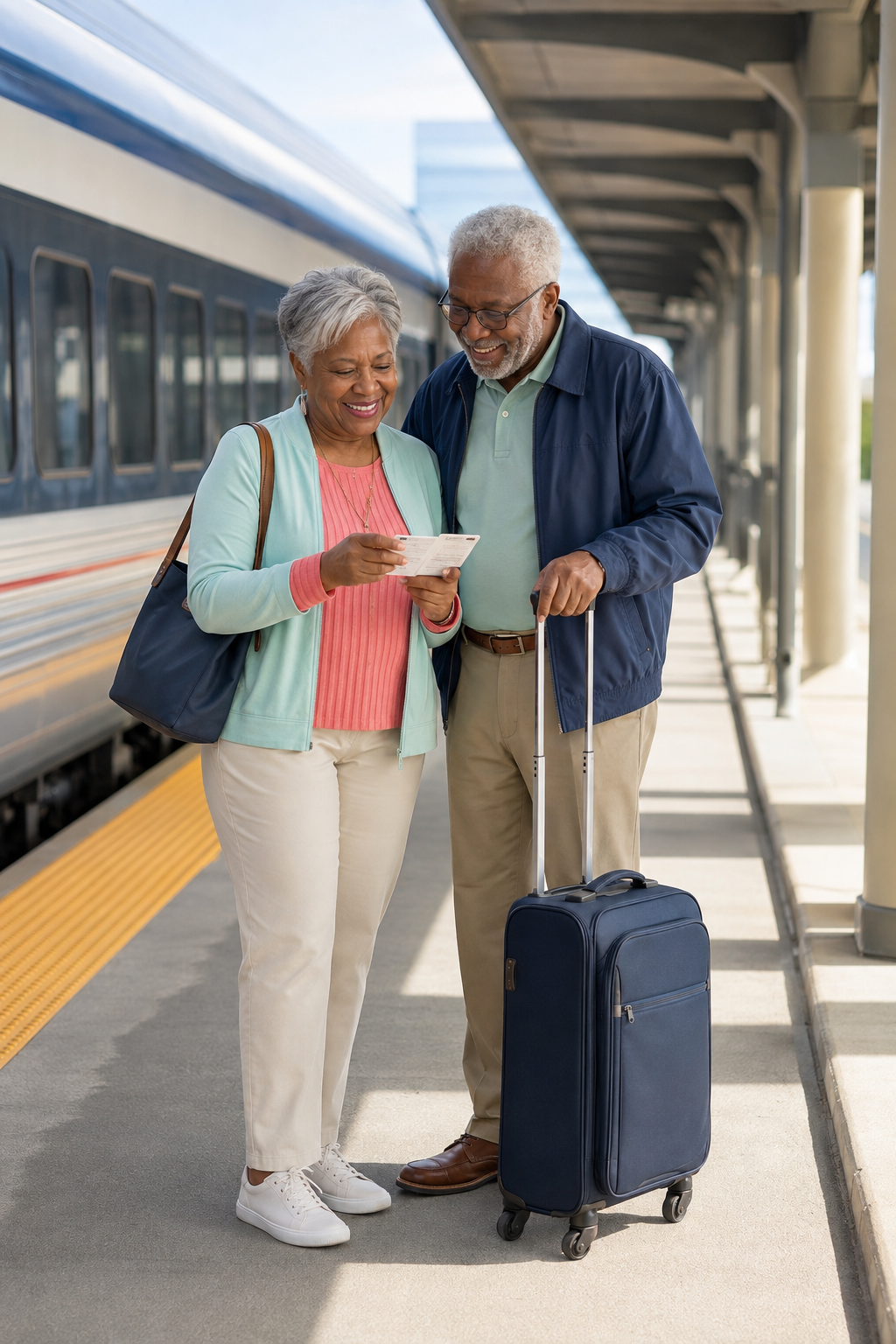
Train travel can be a comfortable alternative to driving or flying, especially when you would rather move around, watch the scenery, and avoid a long day behind the wheel. But a smooth trip depends on checking more than the departure time. Station staffing, baggage service, boarding assistance, and train layouts can vary by route.
Before your next Amtrak trip, use this eight-point checklist to reduce last-minute surprises and make the journey easier on your energy, mobility, and peace of mind.
1. Check Both Stations, Not Just the Train
Start by looking up your departure and arrival stations on Amtrak’s website. Confirm whether each location is staffed and whether it has restrooms, elevators, accessible platforms, baggage help, parking, and an indoor waiting area. A major downtown station may offer services that a small unstaffed stop does not.
If you use a cane, walker, wheelchair, or simply cannot walk long distances comfortably, review the accessibility details for every station on the itinerary—including a transfer point. When something is unclear, call Amtrak before booking rather than assuming assistance will be available.
2. Request Assistance When You Reserve
Amtrak allows travelers to request accessible seating, a station-provided wheelchair, help reaching the train, and boarding assistance. Make the request during the reservation process and describe what you need specifically. “I need help with stairs and getting to my seat” is more useful than a general request for help.
Amtrak advises passengers seeking certain policy modifications to make the request as far in advance as possible and no later than 72 hours before departure. On-the-spot requests can still be made when advance notice is not practical, but early communication gives staff more time to prepare.
3. Build in More Arrival Time Than You Think You Need
For most trains, Amtrak recommends arriving about 30 minutes before departure. If you need help with baggage, ticketing, or accessible assistance, the guidance is to arrive 60 minutes early. Auto Train has a different process and requires substantially more time.
At a staffed station, tell a customer service representative that you have arrived and have a request on the reservation. At an unstaffed station, look for posted boarding instructions and check the train status before leaving home.
4. Pack for What You Can Comfortably Handle
Amtrak’s current carry-on policy allows one personal item and two carry-on bags free of charge. Size and weight limits apply, and passengers must be able to lift carry-on items safely into the luggage area. The official maximum is not necessarily the right amount for you.
A practical approach is one small rolling suitcase plus a light bag that fits under the seat. Keep medication, identification, tickets, glasses, chargers, and a layer of clothing in the smaller bag so you do not need to repeatedly reach into a larger suitcase.
5. Confirm Whether Checked Baggage Exists on Your Route
Amtrak offers checked baggage on many trains and at many stations, but not all routes or locations provide it. Both the origin and destination must support the service. Confirm this before packing a bag you cannot manage onboard.
Current policy permits two checked bags free, up to 50 pounds and 75 linear inches each, where the service is available. Label every bag with your name and contact information, and keep essentials with you rather than in checked luggage.
6. Choose a Seat for the Trip You Are Actually Taking
Think about the whole journey, not only the ticket price. If standing from a low seat is difficult, ask whether an accessible seat is appropriate. Amtrak says accessible seats provide extra room for travelers who need accessibility features, including some passengers who use walkers or have limited leg movement.
For overnight travel, compare coach seating with a room before booking. A private room costs more, but privacy, a place to lie down, and nearby assistance may be worth the difference for a long route. Review the exact train and accommodation because layouts vary.
7. Keep a Small “Seat Kit” Within Reach
Pack a small pouch or under-seat bag with water, a snack, tissues, hand sanitizer, a phone charger, headphones, and any medication you may need during the trip. Add a written list of important phone numbers in case your phone loses power.
Wear layers and comfortable shoes with good traction. Train temperatures can change, and platforms may be wet or uneven. Keep the aisle clear and store bags only in approved areas so they do not become a tripping hazard.
8. Recheck the Trip the Day Before
Confirm the departure time, station address, parking plan, train status, and any assistance request. Save the reservation number and ticket on your phone, but bring a printed copy if that makes you more comfortable.
If a friend or family member is meeting you, share the train number and expected arrival time. Decide where you will meet before the train arrives, especially at a large station with several exits.
The Bottom Line
A comfortable train trip begins before you reach the platform. Check station services, request specific help, arrive early, and pack only what you can manage safely. A few careful decisions can turn an uncertain travel day into a calmer and more enjoyable journey.
Policies, fees, and services can change. Verify the details for your train and stations directly with Amtrak before traveling.