Practical guidance for living healthier, aging well, and becoming more of who you want to be.


Food connects us to a destination, but contaminated food or water can quickly disrupt a trip. Older adults and people with weakened immune systems may be more susceptible to serious illness, so prevention matters.
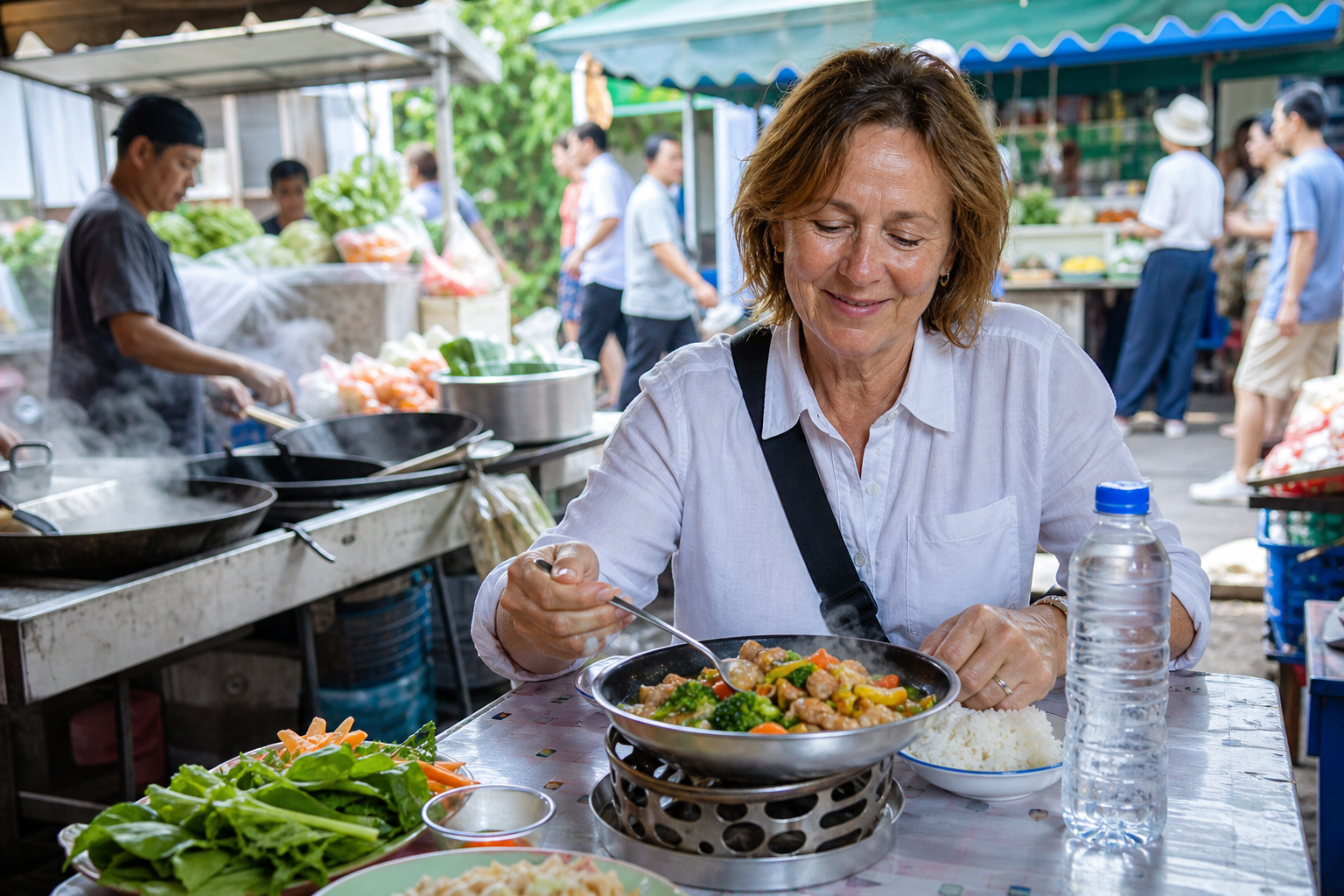
The goal is not to avoid local cuisine. It is to notice how food is cooked, held, washed, and served.
Remember: hot should be hot, cold should be cold
Choose food that is thoroughly cooked and served steaming hot. Be cautious with lukewarm buffets, food that has sat uncovered, and dishes reheated unevenly. Cold foods should be properly chilled.
Raw or undercooked meat, seafood, shellfish, and eggs carry risk. Unpasteurized milk, cheese, and juice can also transmit infection. People with weakened immunity should be especially careful with these foods.
Street food is not automatically unsafe. Look for a busy vendor with high turnover, clean utensils, food cooked in front of you, and hot food served immediately. Avoid items that have been sitting at room temperature.
Treat raw produce thoughtfully
In places where tap water may be unsafe, raw salad and pre-cut fruit can be contaminated during washing or preparation. Fruit you peel yourself is generally a more controllable choice. Wash hands before peeling and keep the clean interior away from contaminated surfaces.
Know what “safe water” includes
Unsafe tap water can affect more than drinking. It may be used for ice, brushing teeth, fountain drinks, rinsing produce, or preparing juice.
When water quality is uncertain:
- Use factory-sealed bottled or properly disinfected water.
- Check that a bottle seal is intact.
- Avoid ice unless it was made from safe water.
- Brush teeth with safe water.
- Do not swallow shower or recreational water.
- Choose steaming-hot tea or coffee.
Carbonated drinks in sealed containers can provide a visible sign that the seal has not been opened. Water treatment methods differ in their ability to remove bacteria, viruses, parasites, and chemicals, so use CDC destination guidance rather than improvising.
Clean hands still matter
Wash with soap and water before eating and after using the bathroom. When those are unavailable, CDC recommends an alcohol-based hand sanitizer containing at least 60% alcohol. Sanitizer does not remove every organism and works poorly on visibly dirty hands, so washing remains preferable.
Pack a small response kit
Ask a clinician what is appropriate for your health and destination. Useful items may include oral rehydration salts, a thermometer, hand sanitizer, and written instructions for when to seek care. Do not automatically take leftover antibiotics or someone else’s medicine.
Travelers with kidney disease, heart failure, diabetes, or fluid restrictions need individualized guidance about dehydration and rehydration.
Know when illness needs medical attention
Seek professional care for bloody diarrhea, high fever, severe abdominal pain, repeated vomiting, signs of dehydration, confusion, or symptoms that persist. A person who cannot keep fluids down may need prompt treatment.
After international travel, tell the clinician where you went, what you ate or drank, and when symptoms began. Some infections appear after the trip ends.
A balanced rule for choosing meals
Ask three questions:
- Was it cooked thoroughly?
- Is it being served at a safe temperature?
- Was the water used to prepare it likely safe?
Food is part of the joy of travel. A few consistent decisions—freshly cooked meals, safe water, clean hands, and early attention to warning signs—can protect that experience without removing the adventure.
Sources
- CDC Yellow Book, Food and Water Precautions for Travelers: https://www.cdc.gov/yellow-book/hcp/preparing-international-travelers/food-and-water-precautions-for-travelers.html
- CDC Travelers’ Health, Food and Drink Considerations When Traveling: https://wwwnc.cdc.gov/travel/page/food-water-safety
This article is for general educational purposes and is not medical advice.