Practical guidance for living healthier, aging well, and becoming more of who you want to be.


Balance is not a fixed trait that you either have or lose. It depends on strength, vision, the inner ear, sensation in the feet, reaction time, medications, and the environment—and several of those factors can be improved.
The U.S. Preventive Services Task Force recommends exercise interventions for community-dwelling adults age 65 and older who are at increased risk of falling. The strongest programs do more than stretch: they challenge balance and often include strength and functional movement.
Who should pay particular attention?
Fall risk is higher if you have fallen in the past year, feel unsteady while walking, need your hands to rise from a chair, take medications that cause dizziness or sedation, have vision or foot problems, or avoid activities because you fear falling.
A fall or near-fall is useful information, not a personal failure. Tell your healthcare professional, especially if you hit your head, fainted, or cannot explain why you fell.
What effective exercise can look like
Research does not point to one magical move. Programs commonly combine:
- Balance challenges
- Leg and hip strengthening
- Walking and changes of direction
- Functional tasks such as standing from a chair
- Sometimes tai chi, dance, or other multicomponent activity
In the LiFE randomized trial, older adults at elevated fall risk practiced balance and strength activities embedded into daily routines. The program reduced the rate of falls compared with a control program and improved several measures of balance and function.
A safe beginner routine
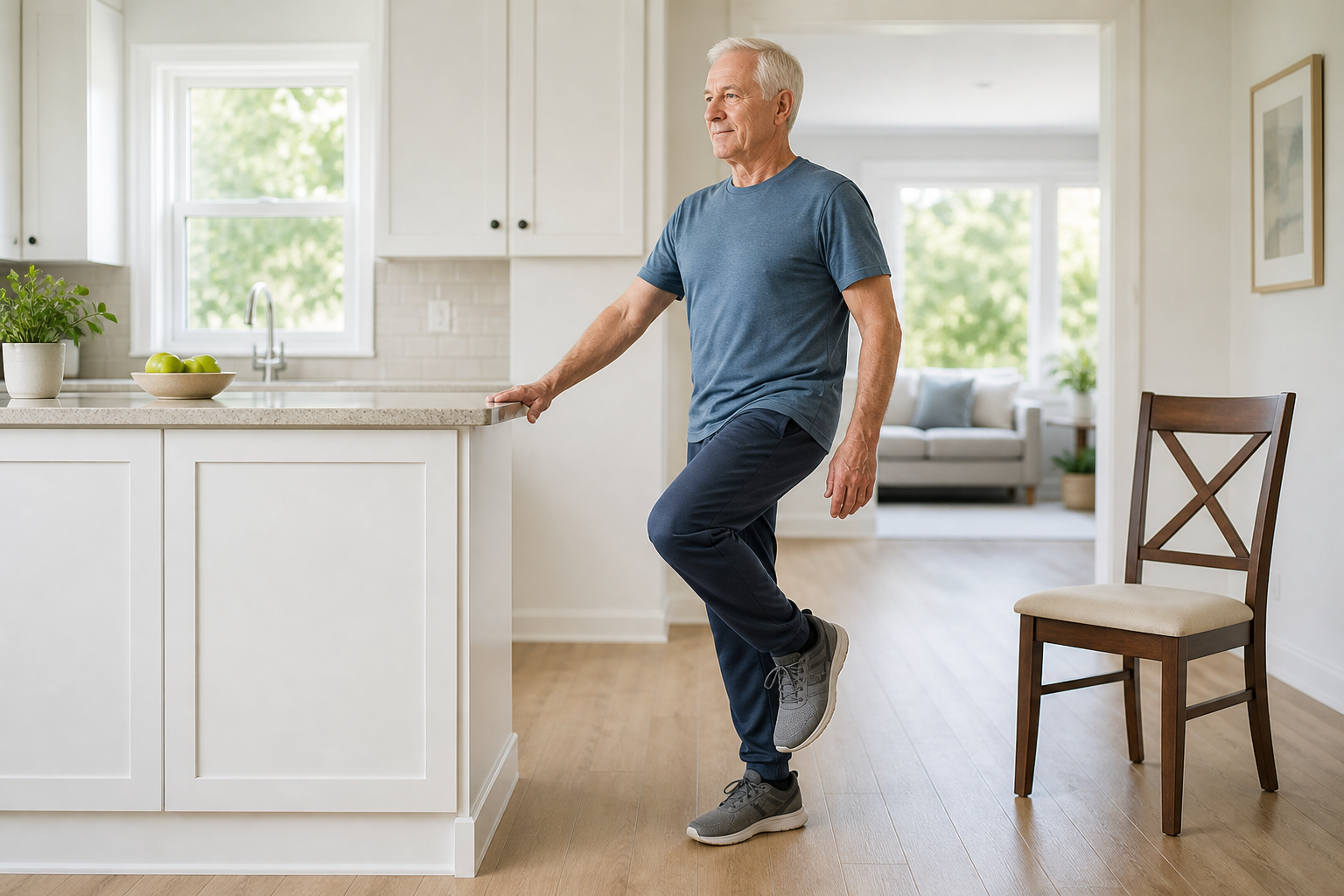
Stand beside a sturdy counter, not a movable chair. Keep both hands close to support and have someone nearby if you are uncertain.
Supported narrow stance
Stand with your feet close together for 10 to 30 seconds. Progress only when steady.
Heel-to-toe stance
Place one foot partly or fully in front of the other, as if standing on a line. Hold the counter as much as needed. Switch sides.
Supported single-leg stand
Lift one foot slightly from the floor while keeping fingertips on the counter. Even a few seconds is useful.
Sit-to-stand
From a sturdy chair, lean forward and stand with control. Use your hands if needed. Sit down slowly.
Heel raises
Holding the counter, rise onto the balls of your feet and lower slowly.
Practice on several days each week. The exercise must be challenging enough to train balance but safe enough to avoid a fall. A physical therapist can adjust the difficulty precisely.
Reduce hazards beyond exercise
Exercise is important, but fall prevention may also include:
- Reviewing medications that cause dizziness or sleepiness
- Checking vision and hearing
- Treating foot pain and choosing secure footwear
- Improving lighting, especially on stairs and the route to the bathroom
- Removing loose rugs and cords
- Installing secure handrails or grab bars when needed
Vitamin D should not be treated as a universal fall-prevention solution. The USPSTF no longer recommends routine supplementation solely to prevent falls in community-dwelling older adults; individual deficiencies and medical indications are separate questions for a clinician.
The bottom line
Balance improves when it is practiced. Combine safe balance challenges with leg strength and everyday movement, and address medical or environmental risks rather than relying on a single exercise or supplement.
Sources
- USPSTF: Falls Prevention in Community-Dwelling Older Adults
- LiFE Randomized Trial: Integrating Balance and Strength Training Into Daily Activity
- Physical Activity Guidelines for Americans, 2nd edition
This article provides general educational information and is not a substitute for personalized medical advice.