
Practical guidance for living healthier, aging well, and becoming more of who you want to be.


An e-bike does not do all the work for you. Most models assist while you pedal, making hills, headwinds, and longer distances feel more manageable. That support can turn cycling into a social hobby for people whose fitness levels or joint comfort differ.
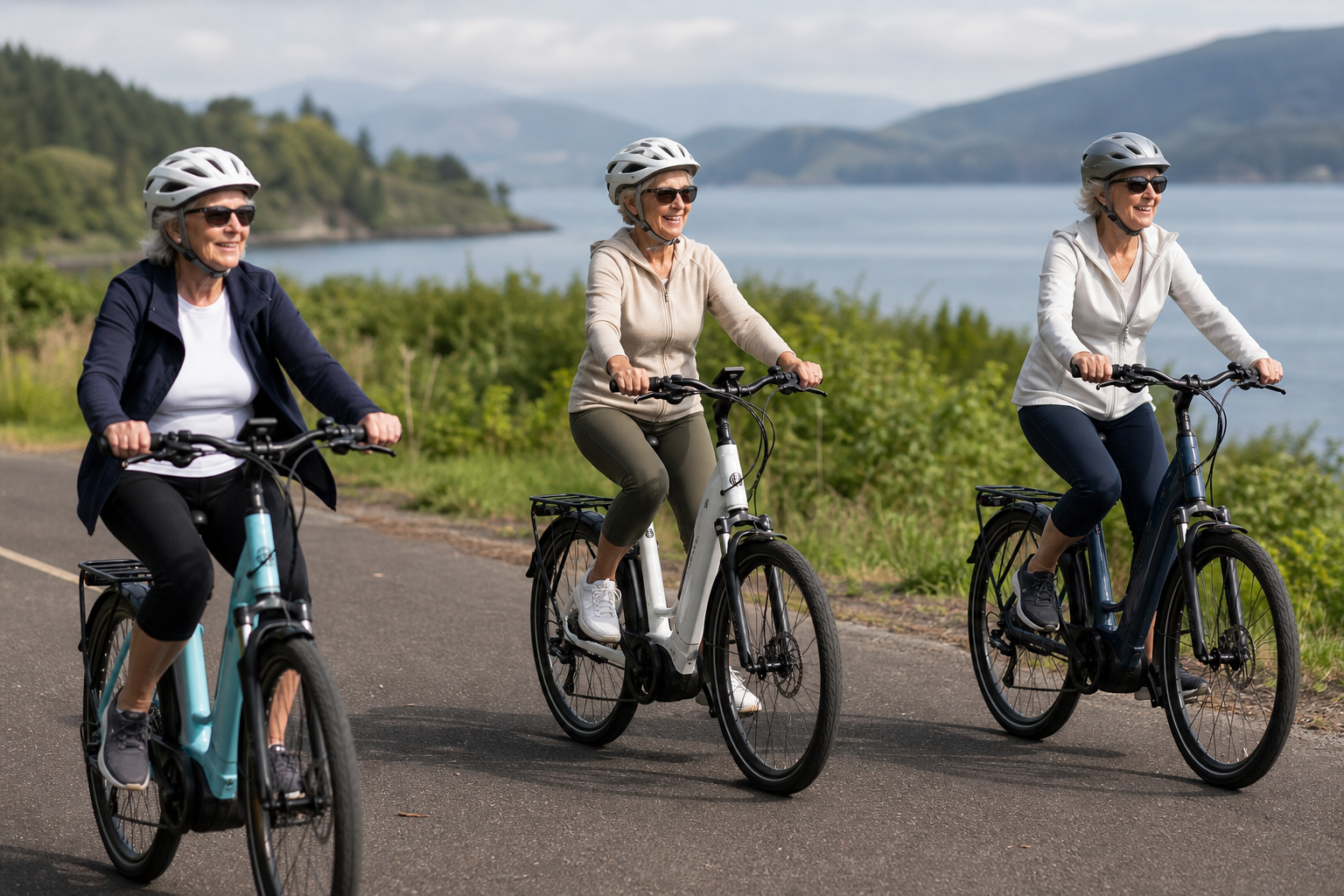
The extra speed and weight also change how the bicycle handles. A thoughtful beginner starts in a quiet place, learns the controls, and chooses a group that values comfort rather than competition.
Try before you buy
E-bikes vary in frame shape, motor response, weight, controls, and riding position. Test several models with a knowledgeable shop. You should be able to start, stop, mount, dismount, and place a foot down confidently.
Ask how much the bike weighs and whether you can move it without motor assistance. Consider where it will be stored, charged, transported, and serviced. A bike that is enjoyable on the trail may be impractical if it cannot be lifted onto your rack.
Learn the assistance levels
Practice in an empty parking lot or protected area. Begin with the lowest assistance setting and rehearse:
- Smooth starts and stops
- Straight-line braking
- Looking behind without swerving
- Slow turns
- Shifting gears before a hill
- Starting again on a slight incline
Electric assistance can surge if a rider pedals while turning sharply. Keep movements deliberate until the response feels predictable.
Wear a properly fitted helmet every ride
The U.S. Consumer Product Safety Commission recommends a properly fitted helmet for bicycles and e-bikes. Choose one that meets an applicable safety standard, sits level on the head, and is adjusted correctly.
Use visible clothing, lights, and reflectors. Carry identification, water, a charged phone, and a simple repair kit. Local e-bike laws differ by class, speed, age, and trail, so check the rules for every route.
Treat the battery with respect
Use the charger supplied or specified by the manufacturer. Follow charging instructions, unplug the battery when charging is complete, and do not use a damaged, swollen, modified, or overheated battery.
Charge in a dry location away from exits and combustible materials. Do not improvise repairs or use an incompatible replacement. Ask the shop about recognized electrical safety certification and local battery recycling.
Find the right group
Look for a “no-drop” ride, meaning no participant is abandoned. Ask about distance, hills, surface, average speed, traffic, restrooms, and planned stops. A 12-mile protected trail ride is very different from a fast road ride with steep climbs.
Tell the leader you are new to the bicycle. Ride near the back until you understand the group’s signals and spacing. Leave enough distance for the e-bike’s extra weight and speed.
Build confidence gradually
Choose short, familiar routes first. Stop while you still feel steady and attentive. Weather, fatigue, medication effects, vision, and balance can change from day to day.
An e-bike can expand the map without turning the outing into a test of endurance. The best ride is not the one with the most miles; it is the one that leaves you confident enough to plan the next one.
Sources
- U.S. Consumer Product Safety Commission, Ride Smart: Always Wear a Helmet: https://www.cpsc.gov/node/66646
- CDC, What Counts as Physical Activity for Older Adults: https://www.cdc.gov/physical-activity-basics/adding-older-adults/what-counts.html
- National Institute on Aging, Participating in Activities You Enjoy as You Age: https://www.nia.nih.gov/health/participating-activities-you-enjoy
This article is for general educational purposes and is not medical, legal, or product-safety advice.
Where to Find This Activity Near You
Use your city, state, or ZIP code on the sites below to find nearby facilities, groups, classes, and events:
- Meetup — Search for local e-bike and cycling groups
- Eventbrite — Find organized rides and cycling events
Before attending, confirm the current schedule, cost, accessibility, beginner level, equipment needs, and cancellation policy directly with the organizer. More to Become does not operate or endorse individual groups or events.