
Practical guidance for living healthier, aging well, and becoming more of who you want to be.


A sunny destination can become exhausting—or dangerous—when heat, humidity, walking, and unfamiliar routines combine. Older adults and people with chronic conditions can become ill more quickly, and some medications affect sweating, circulation, fluid balance, or alertness.
The safest response is not to give up warm-weather travel. It is to design the trip around the climate rather than pretending every hour is equally comfortable.
Check more than the daily high
Before booking, compare typical temperature, humidity, nighttime cooling, wildfire smoke, and the availability of air conditioning. Shortly before each travel day, check local heat alerts and air-quality information.
Ask the hotel whether air conditioning operates independently in the room and whether it remains available overnight. “Climate controlled” can mean different things, so request specific details.
Build the day around cooler hours
Schedule outdoor sightseeing early in the morning. Reserve the hottest part of the afternoon for lunch, a museum, a rest at the hotel, or transportation. Return outdoors later if conditions improve.
Map shaded routes and identify air-conditioned stops before leaving. A 20-minute walk on a mild day can feel completely different in direct sun on hot pavement. Reduce distance, use transit, or take a taxi before symptoms begin.
Dress for heat without ignoring sun
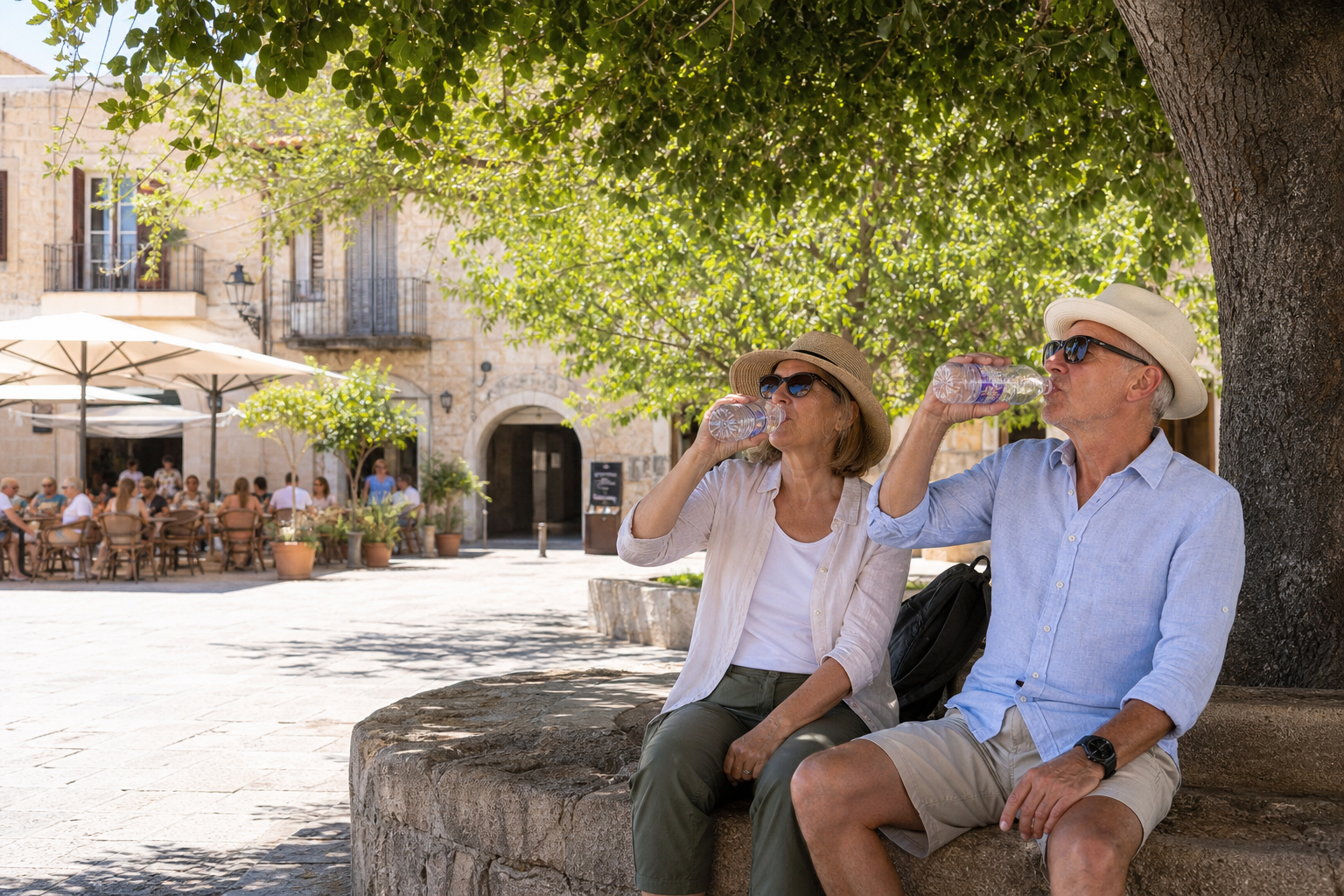
CDC guidance recommends loose, lightweight, light-colored clothing, a wide-brimmed hat, sunglasses, sunscreen, shade, and frequent rest. Breathable long sleeves can sometimes provide better sun protection than exposing more skin.
Carry water, but do not assume that forcing large quantities is always safe. Excessive water intake can contribute to dangerously low sodium, especially during prolonged exertion. People whose clinician limits fluids or who take diuretics should ask how to manage hot conditions before travel.
Review medications in advance
Some medicines can increase heat sensitivity or dehydration risk. Do not stop or change a prescription on your own. Ask a pharmacist or clinician whether any medication affects sweating, blood pressure, fluid balance, or sun sensitivity and how it should be stored.
Medicines should not be left in a hot vehicle. If a product requires a temperature range or refrigeration, obtain written storage instructions and plan an appropriate insulated container.
Recognize heat exhaustion early
Warning signs can include intense thirst, heavy sweating, headache, dizziness, weakness, nausea, or confusion. Stop the activity, move to air conditioning or shade, loosen excess clothing, cool the skin, and sip fluids if the person is able and has no fluid restriction.
Heat stroke is an emergency. Confusion, fainting, seizures, or very high body temperature require immediate emergency assistance and rapid cooling. Do not wait to see whether the person “walks it off.”
Create a heat backup plan
For every outdoor activity, choose an indoor alternative. Save flexible attractions for the hottest day, book refundable tours when possible, and avoid itineraries that punish you financially for listening to your body.
Travel companions should know where medicines and emergency information are stored. Carry the hotel address, local emergency number, insurance details, and a list of medical conditions and medications.
Use a daily five-question check
Before leaving the hotel, ask:
- Is there a heat or air-quality alert?
- Where will we cool down at midday?
- Do we have water, sun protection, and necessary medication?
- Is today’s walking distance realistic?
- What symptoms mean we stop immediately?
A heat-smart itinerary may look slower on paper, but it often produces a better trip. You spend the comfortable hours doing what matters and the harshest hours recovering—before exhaustion becomes illness.
Sources
- CDC Travelers’ Health, Heat Illnesses: https://wwwnc.cdc.gov/travel/page/travel-to-hot-climates
- CDC, Heat and Older Adults: https://www.cdc.gov/heat-health/risk-factors/heat-and-older-adults-aged-65.html
- CDC Yellow Book, Heat and Cold Illness in Travelers: https://www.cdc.gov/yellow-book/hcp/environmental-hazards-risks/heat-and-cold-illness-in-travelers.html
This article is for general educational purposes and is not medical advice.