
Practical guidance for living healthier, aging well, and becoming more of who you want to be.


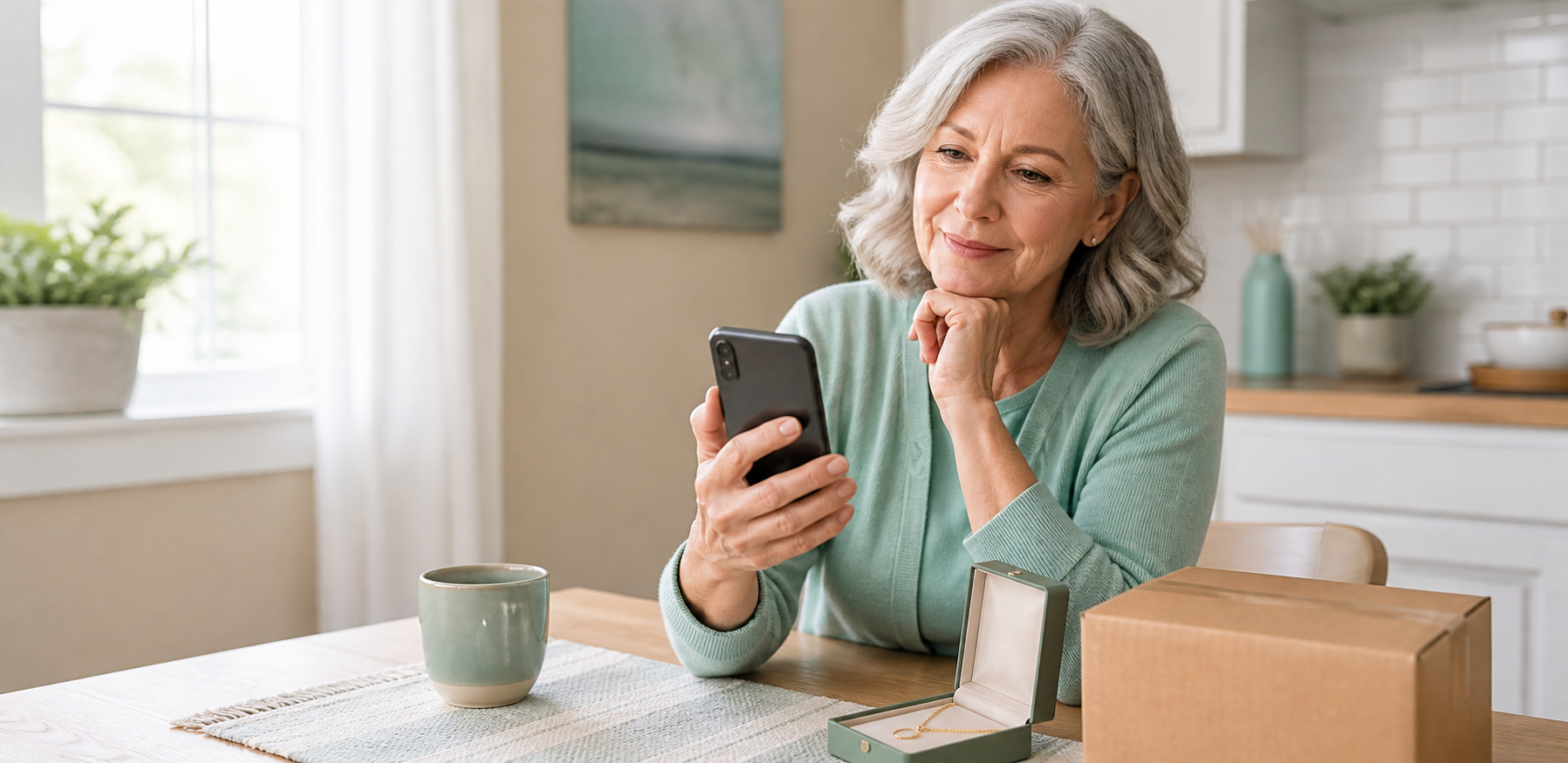
Selling clothes, jewelry, and household items online can be a practical way to clear space and earn extra money. It can also attract people who are not interested in the item at all. Their real goal is to move the seller away from the marketplace’s protections and obtain money or personal information.
I nearly learned this lesson while trying to sell an expensive necklace that had never been worn. I did not lose money or send the necklace, but the experience showed me how a suspicious buyer can gradually make an unsafe request sound reasonable.
Here is what happened, what finally made me stop, and what every online seller—especially an older adult who may be new to resale apps—should know.
The message that sounded like a sale
The necklace was new and valuable, and I was eager to find a buyer. Someone contacted me through Vinted and said they wanted it. That was welcome news until the person said they could not pay through Vinted.
Instead, they offered to mail me a check.
Vinted repeatedly encourages members to keep communication and transactions within its system, so the request immediately felt unusual. The buyer had an explanation: they could not use a card in their current situation. They insisted the check was reliable and repeatedly assured me that I could trust them.
At first, I did not want to share any personal information. But wanting to complete the sale made the explanation easier to accept. Eventually, I provided my name, mailing address, and telephone number in the Vinted conversation.
The person then used my number to contact me by text message, moving the conversation outside the app. They said they would mail the check and that I could cash it before sending the necklace.
Then came the request that made the situation clear: they asked me to photograph my identification and text the image to them, supposedly so they could trust me.
I refused, ended the conversation, and did not send an ID, deposit a check, ship the necklace, or send money.
Why this pattern is dangerous
No single friendly message proves that a person is dishonest. The danger lies in the sequence of requests.
1. The buyer wanted to bypass the platform’s payment system
An unfamiliar buyer who refuses the marketplace’s normal checkout is asking you to give up important protections. Vinted advises members to remain in its secure conversation system, avoid disclosing private information in messages, and use its checkout and shipping features. It also warns that support is limited when payment happens outside its system.
Read Vinted’s guidance on safe communication and payment
2. The buyer had a story explaining why the rules could not apply to them
Scammers frequently use plausible personal circumstances: a card is unavailable, they are traveling, an assistant will handle payment, or a family member will collect the item. A story can sound sincere and still be designed to make an unusual payment request seem harmless.
The safest response is simple: if the person cannot use the platform’s approved transaction process, do not complete the sale with that person.
3. Reassurance replaced verification
“You can trust me” is not a form of payment verification. Repeated reassurance can lower a seller’s resistance without providing any evidence that the transaction is legitimate.
Pressure does not always sound threatening. It may sound patient, friendly, or sympathetic. The goal is still to keep you engaged until you agree to the next request.
4. The conversation moved to a private phone number
Once communication moves to text or email, the marketplace may have less visibility into what happens. The scammer can send deceptive links, fake payment notices, or requests for verification codes. Vinted specifically warns that phishing attempts may arrive through in-app messages, texts, emails, and QR codes.
See Vinted’s phishing and spoof-message examples
5. The buyer requested a photo ID
A stranger does not need a copy of your driver’s license or other identification to purchase your item. An ID image can expose a full legal name, photograph, birth date, address, document number, signature, and other information useful for identity theft or impersonation.
Some marketplaces may legitimately require identity verification from sellers for legal or payment-processing reasons. That is different. A legitimate verification request should appear through the platform’s official, secure process—not as a buyer’s text message. When uncertain, close the message and contact the platform through its official app or website.
How a fake check can look real
The buyer’s promise that I could cash the check before shipping might sound protective. It is not.
Banks generally make deposited funds available before they have fully determined whether a check is legitimate. A balance may appear in your account, and you may be able to withdraw it. Weeks later, the bank may discover that the check is counterfeit or drawn on a stolen account. The deposit is then reversed.
By that point, a seller may already have shipped the item. In other versions of the scheme, the buyer sends too much and asks the seller to return the difference, pay a shipper, purchase gift cards, or transfer money elsewhere. When the check is reversed, the seller loses the item, any money sent, and may owe the bank.
The Federal Trade Commission and U.S. Postal Inspection Service both warn that a check appearing to “clear” does not prove it is genuine.
The 10-second seller safety check
Before responding to a buyer, ask:
- Are they asking me to leave the app or website?
- Are they refusing the platform’s normal payment method?
- Are they requesting my phone number, email, home address, bank information, verification code, or ID in a message?
- Are they sending a link, QR code, payment screenshot, or email that I cannot verify inside my account?
- Are they creating urgency or repeatedly telling me to trust them?
- Are they offering a check, especially for more than the agreed price?
- Are they asking me to pay a shipper, refund an overpayment, or send money elsewhere?
One warning sign is enough to pause. Several warning signs are a reason to stop the transaction.
Rules that make online selling safer
- Keep conversations inside the marketplace.
- Use only the payment and shipping process shown in your own account.
- Never trust a payment confirmation sent only by email, text, or screenshot. Verify the transaction by opening the official app yourself.
- Do not send a stranger a photo of your ID, payment card, bank statement, or account screen.
- Never share a login code or verification code.
- Do not accept a check from an unfamiliar online buyer.
- Never return an alleged overpayment or pay a third-party shipper for the buyer.
- For valuable items, photograph the item, serial or identifying details when appropriate, and the packing process. Follow the platform’s insurance and shipping rules.
- Check the buyer’s profile and transaction-based reviews, but remember that a polished profile or official-looking image can be faked.
- When something feels wrong, pause and ask a trusted person to review the messages before you act.
What to do if you already shared information
Do not panic. The next steps depend on what was disclosed.
If you shared only your name, address, or phone number
- Stop responding and block the account and telephone number.
- Save screenshots of the profile, in-app conversation, and text messages.
- Report the member to the marketplace.
- Be cautious of follow-up texts, unexpected packages, fake support calls, password-reset messages, and links.
- Strengthen passwords on important accounts and enable multi-factor authentication, especially if the scammer also learned your email address.
If you shared login credentials, financial information, or an ID image
- Change the affected passwords immediately and do not reuse the new password elsewhere.
- Contact the relevant bank or card issuer using the number printed on your card or an official website.
- Follow the recovery steps at IdentityTheft.gov if identity information may be misused.
- Consider a fraud alert or credit freeze through the three major credit bureaus.
If you deposited a suspicious check or sent money
Contact your bank immediately and explain that the transaction may involve a fake check. Do not spend or forward any of the funds. Report the attempt at ReportFraud.ftc.gov. If a check or money order arrived through the mail, you can also report suspected mail fraud to the U.S. Postal Inspection Service.
A convincing logo is not proof
Scammers copy marketplace logos, colors, email layouts, employee badges, and support language. They may send a photograph of an alleged employee ID or a realistic-looking payment receipt. Those images prove nothing by themselves.
Do not use the telephone number, email address, or link contained in a suspicious message to verify it. Open the company’s official app or type the official website address yourself. Check the transaction inside your account or contact support through the verified help center.
The lesson I took from this experience
The most important warning did not arrive at the beginning. The requests became more invasive one step at a time: first an off-platform payment, then contact details, then private texts, and finally a photo ID.
Wanting to sell an item quickly can make us focus on the promised payment rather than the unusual process. That does not mean the seller is careless. It means the approach was designed to exploit a normal goal.
My rule now is straightforward: a genuine buyer can complete the transaction through the marketplace. If someone needs me to abandon the platform’s safeguards, provide private information, or prove my identity directly to them, I am willing to lose the sale.
Protecting your identity and money is worth far more than completing one transaction.
Important: This article provides general consumer education, not legal or financial advice. Platform features and policies may change. Review the current safety guidance in the official app or website before completing a transaction. If you believe your identity or money is at risk, contact the relevant institution and appropriate authorities promptly. Reviewed August 27, 2026.