Practical guidance for living healthier, aging well, and becoming more of who you want to be.


The pool can be more than a place to exercise. A regular water-aerobics class becomes a weekly social group. Lap swimming can become a skill project. Gentle water walking can turn movement into a calm, enjoyable routine.
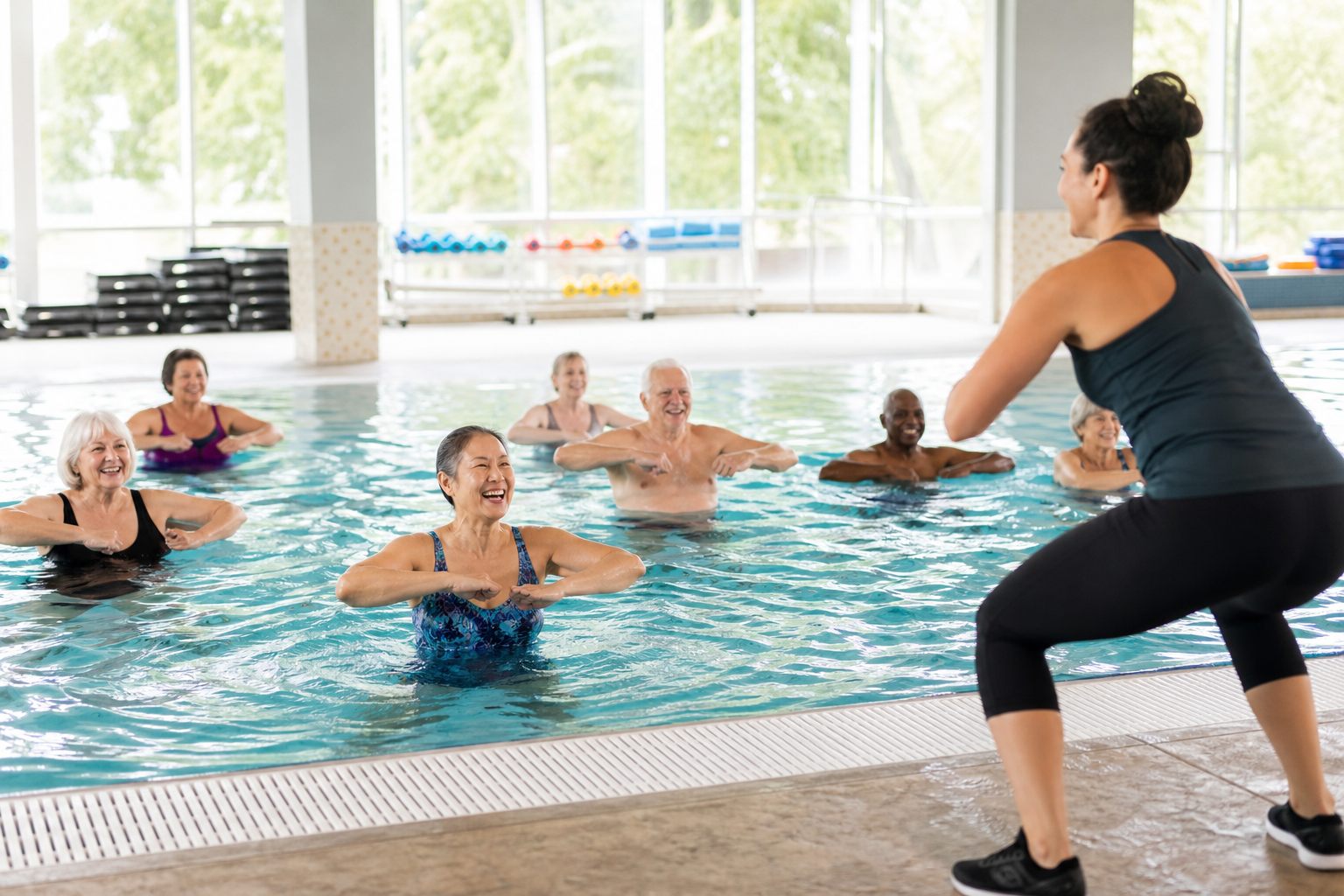
Water supports body weight, but it does not remove every risk. A good start depends on safe entry, an appropriate class level, and honest attention to health and swimming ability.
Choose the right format
Options include shallow-water aerobics, deep-water exercise with a flotation belt, lap swimming, water walking, and beginner stroke instruction.
Shallow classes may feel more secure because the feet touch the bottom. Deep-water classes reduce impact further but require comfort with flotation. Lap swimming offers independence, while a class provides music, instruction, and conversation.
Observe a session and ask about water depth, temperature, pace, class size, and equipment. A “senior” label does not guarantee that the intensity or pool access is right for you.
Inspect entry and exit
Look for stairs with sturdy handrails, a ramp, or a working pool lift. Wet decks are slippery, so wear nonslip pool shoes outside the water and avoid rushing.
Ask where personal items and mobility devices can be stored safely. Confirm that locker rooms, showers, and restrooms are accessible for your needs.
Start at a conversational pace
CDC guidance includes swimming and water aerobics as aerobic activities. A moderate pace makes breathing faster while still allowing conversation. Begin with a short session and build gradually.
Water can hide how hard you are working because you may feel cool and supported. Stop for chest discomfort, unusual shortness of breath, dizziness, weakness, or confusion.
Discuss individual precautions
People with heart or lung disease, seizures, open wounds, recent surgery, balance problems, or significant fear of water should seek individualized guidance. Some conditions and medications affect temperature regulation, blood pressure, or alertness.
Never swim alone if your health or swimming ability makes assistance important. Tell the instructor what kind of help you may need without disclosing more than you wish.
Make it socially sustainable
Choose a class at a time you can attend consistently. Introduce yourself to one person, learn the instructor’s name, and stay for a brief conversation after class. Familiarity turns attendance into a routine.
Keep the equipment simple: well-fitting swimwear, towel, nonslip shoes, water bottle, and goggles if needed. Rinse and dry hearing devices or other equipment according to manufacturer instructions.
Track enjoyment, not only laps
For the first month, record energy, comfort, and whether you look forward to returning. You may discover that music and classmates matter more than distance—or that quiet lap swimming is exactly the mental break you wanted.
The best water activity is one that feels safe enough to repeat and enjoyable enough that repetition does not feel like a burden.
Sources
- CDC, Older Adult Activity: An Overview: https://www.cdc.gov/physical-activity-basics/guidelines/older-adults.html
- National Institute on Aging, Three Types of Exercise Can Improve Your Health and Physical Ability: https://www.nia.nih.gov/health/exercise-and-physical-activity/three-types-exercise-can-improve-your-health-and-physical
This article is for general educational purposes and is not medical advice.
Where to Find This Activity Near You
Use your city, state, or ZIP code on the sites below to find nearby facilities, groups, classes, and events:
- SilverSneakers — Search fitness and community-class locations
- YMCA — Find a nearby Y and check its pool schedule
Before attending, confirm the current schedule, cost, accessibility, beginner level, equipment needs, and cancellation policy directly with the organizer. More to Become does not operate or endorse individual groups or events.