Practical guidance for living healthier, aging well, and becoming more of who you want to be.


A short daily routine improved leg strength, balance, and functional performance in just 12 weeks—but it is a starting point, not a complete fitness program.
Finding time and energy to exercise can feel difficult, especially when a workout plan calls for complicated equipment or long gym sessions. A randomized study led by researchers at Penn State College of Medicine suggests that a much smaller daily commitment may still produce meaningful improvements for some older adults.
The FAST-2 routine took approximately four minutes and used four functional movements: a push-up variation, chair stands, seated resistance-band rows, and low-step stepping.
What did the researchers study?
The randomized controlled trial included 97 adults age 65 and older, with an average age of about 74. Every participant reported difficulty walking a quarter mile without assistance. Participants were assigned either to begin the FAST-2 program or to a delayed-treatment control group.
The exercise group completed four movements each day for 12 weeks. Each movement was performed for 30 seconds, with approximately 30 seconds of recovery. Participants were encouraged to complete as many safe repetitions as possible without sacrificing form. They also received equipment, instructional videos, reminders, and individual video coaching.
On average, participants completed the program on about 81% of assigned days—approximately 5.6 days per week.
What improved after 12 weeks?
Compared with the control group, participants in the exercise group:
- Completed the five-times sit-to-stand test about 2.3 seconds faster
- Held a one-leg standing position about 3.6 seconds longer
- Completed about 4.2 more chair stands in 30 seconds
No significant exercise-related adverse events were reported. These findings are encouraging because standing from a chair, maintaining balance, and stepping safely are closely connected to everyday independence.
The four-minute routine
Complete each movement for 30 seconds, followed by 30 seconds of recovery. Begin with the easiest version that you can perform safely and with control.
Before you begin: a brief warm-up
The four-minute study routine did not include a warm-up in its reported exercise time. For comfort and safety, consider spending an additional two to three minutes preparing your body before you begin. You might walk slowly around the room or march gently in place, roll your shoulders, move your ankles, and practice two or three easy chair stands. The goal is simply to feel warmer and more comfortable—not tired.
If you feel dizzy, unusually short of breath, unsteady, or have new pain during the warm-up, stop and do not continue with the strength routine.
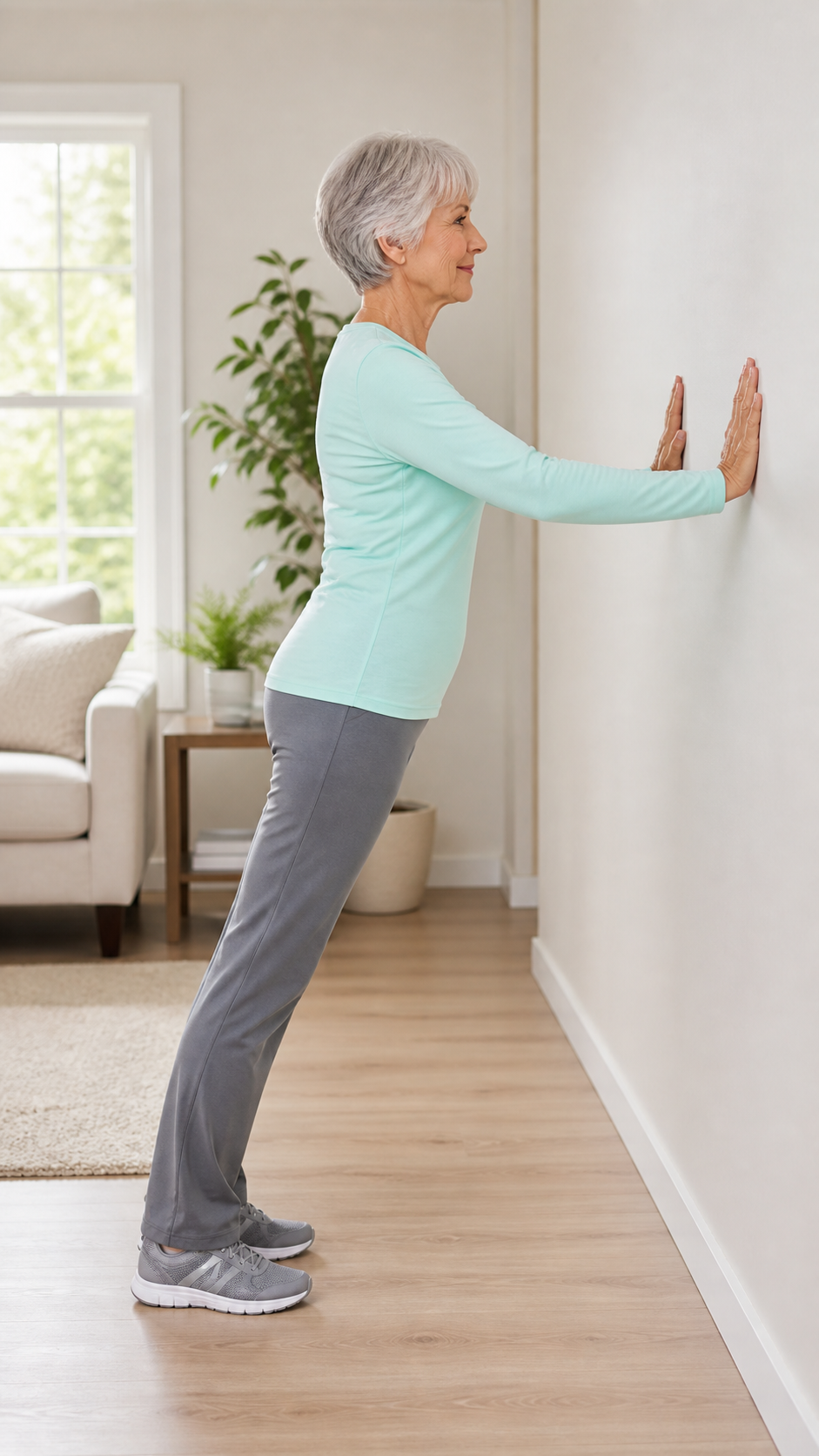
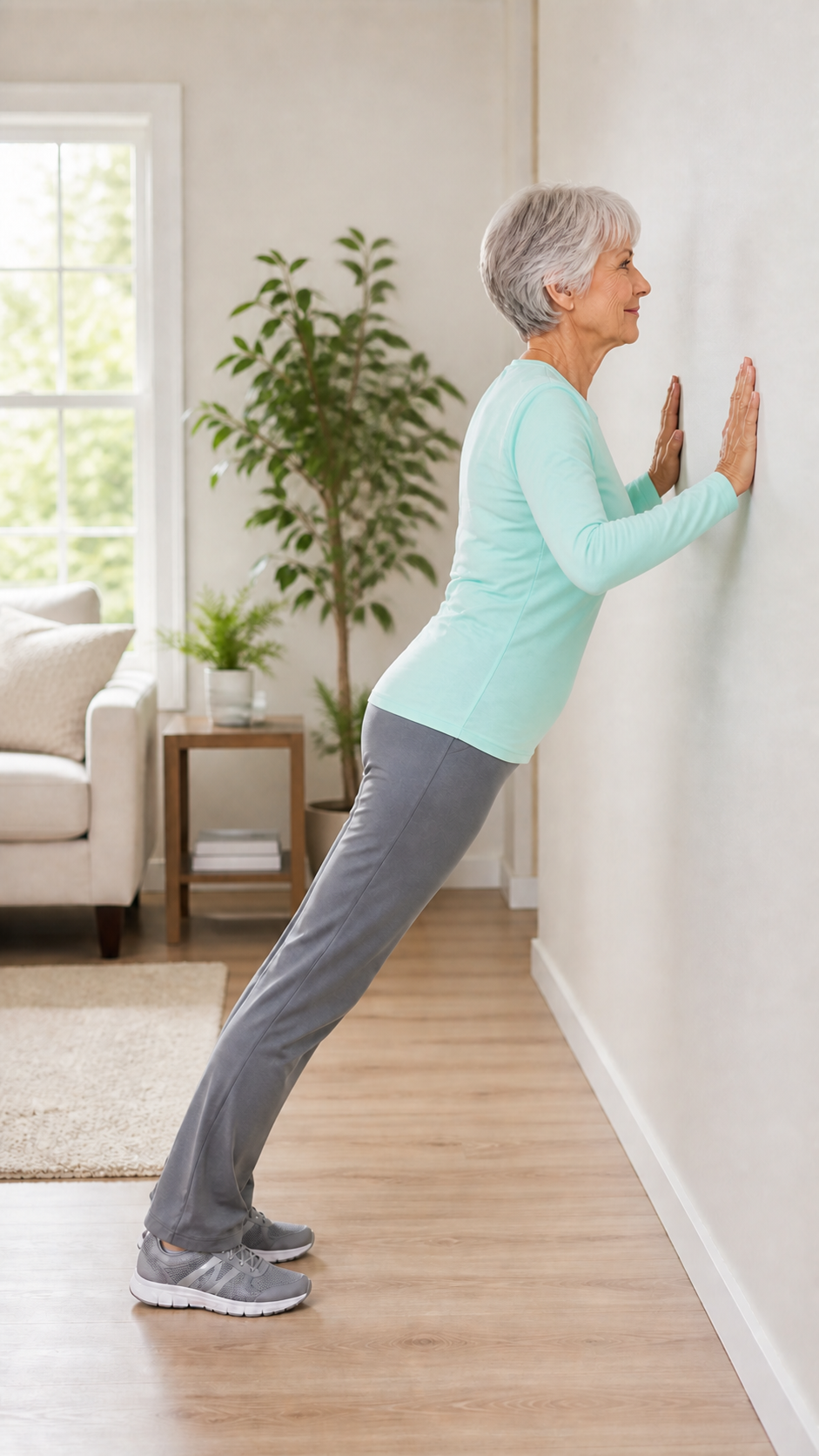
Minute 1: Wall push-up
Place both hands on a wall at mid-chest height. Walk your feet back until your body forms a comfortable straight line. Bend your elbows to bring your chest toward the wall, then press away. Keep your heels down and avoid allowing your hips to sag.
Minute 2: Chair stands
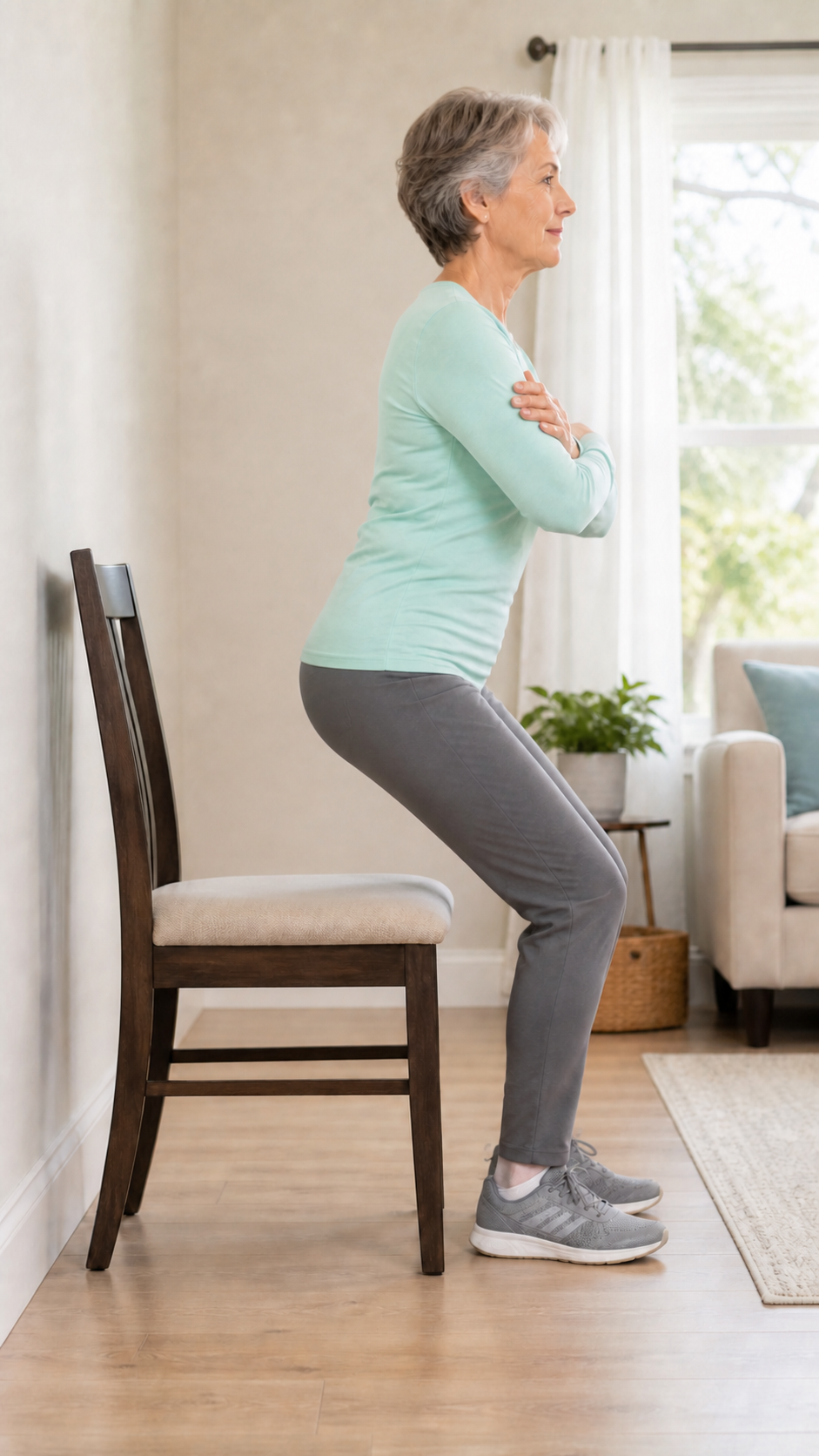
Use a sturdy chair without wheels and place it against a wall. Sit with both feet flat. Lean slightly forward from the hips, press through your feet, and stand. Return to the chair slowly and with control. Use your hands on your knees if you need assistance.

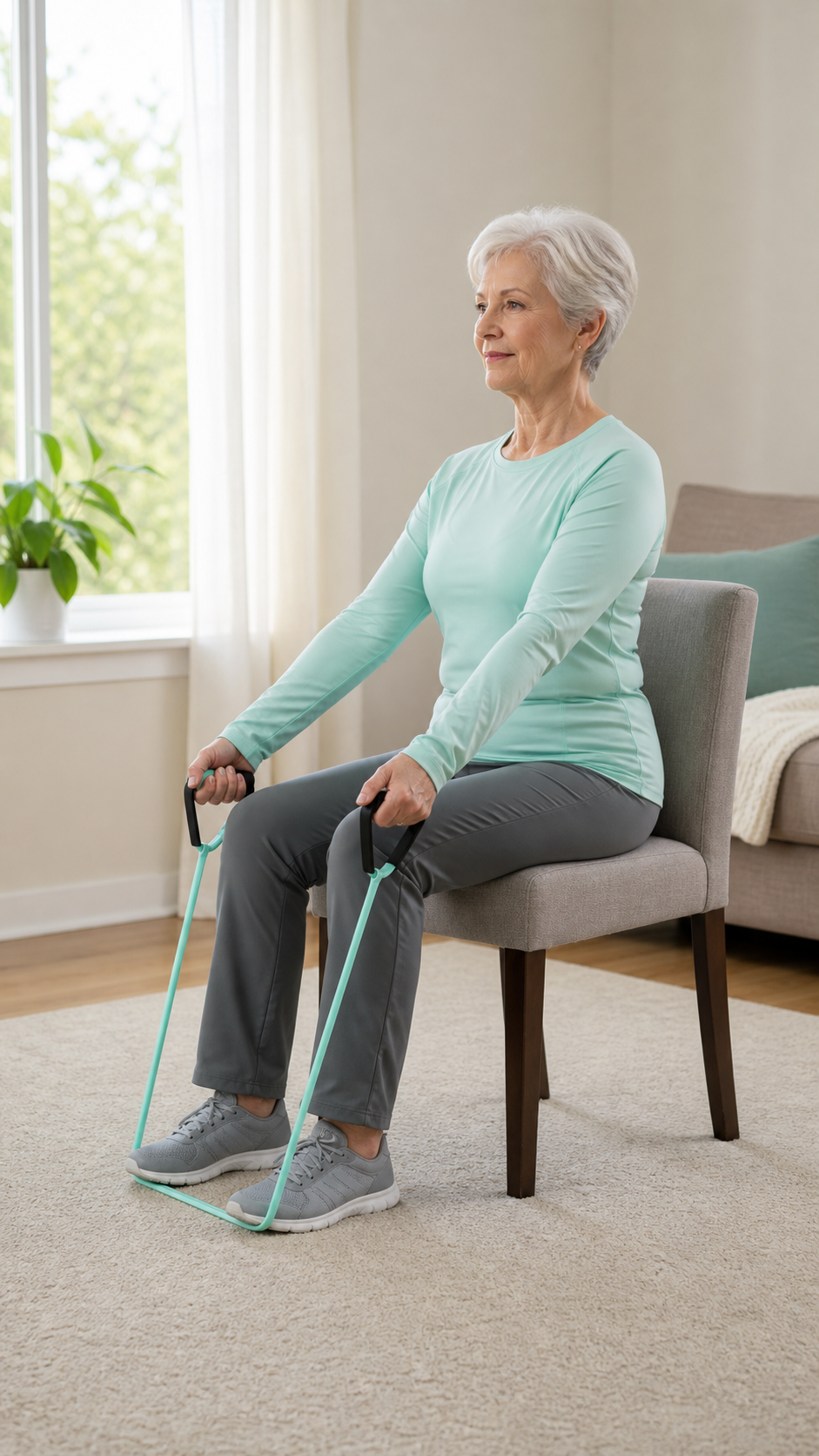
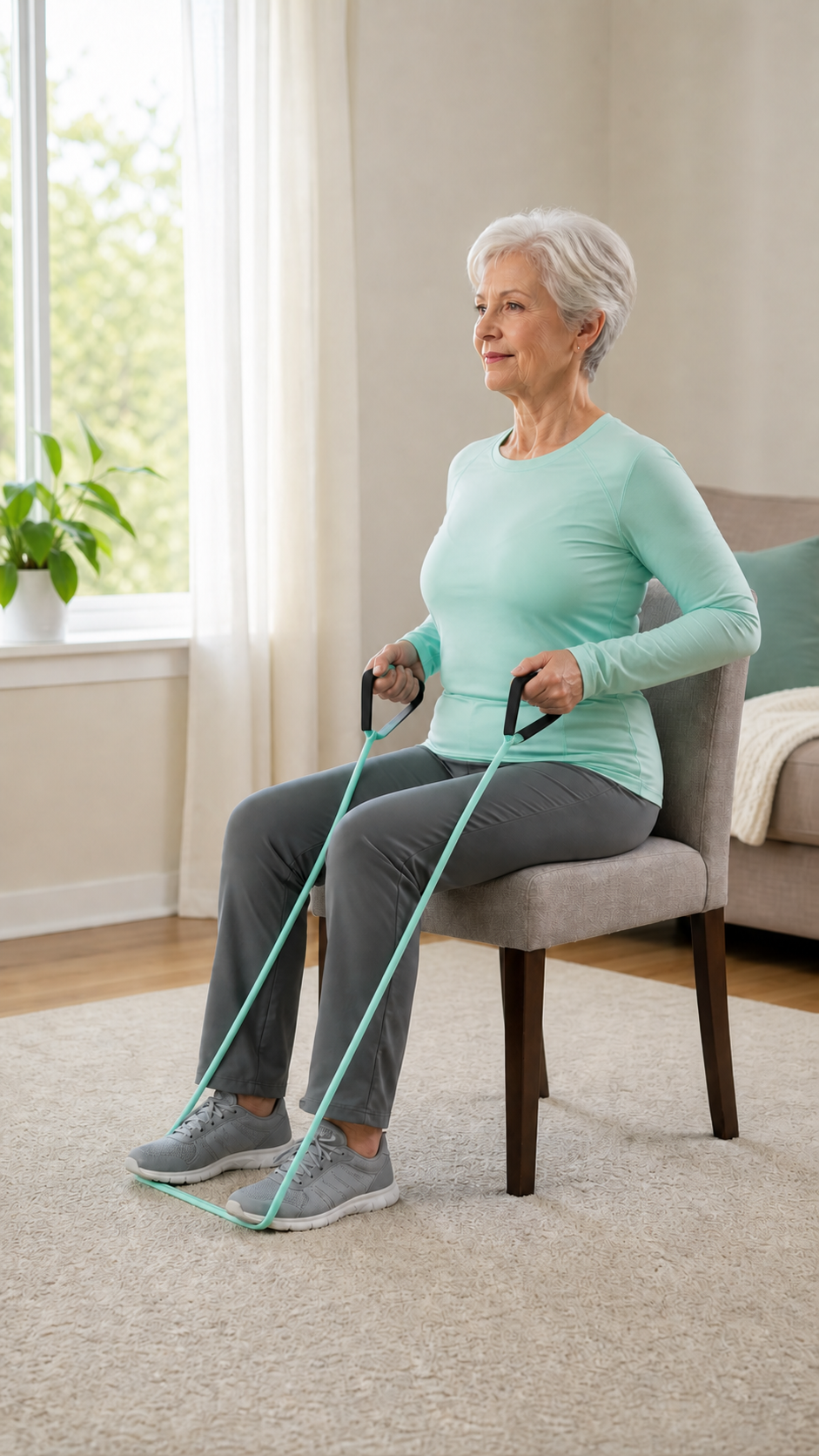
Minute 3: Seated resistance-band rows
Sit upright with both feet flat. Securely loop the center of a resistance band under the arches of both feet and hold one handle in each hand. Begin with your arms extended. Pull your elbows backward toward your lower ribs while gently squeezing your shoulder blades together. Return slowly without rounding your back or leaning backward.
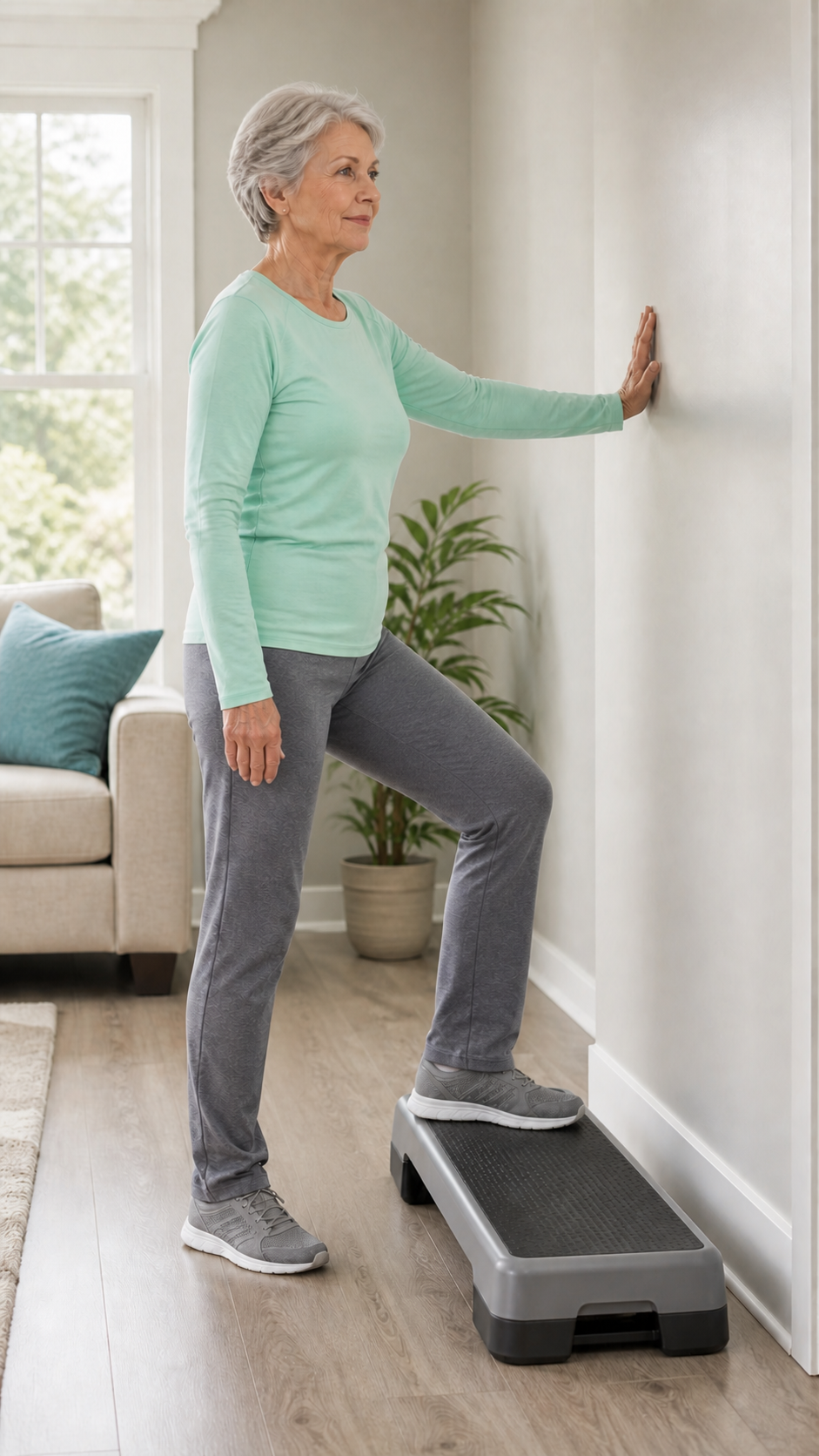
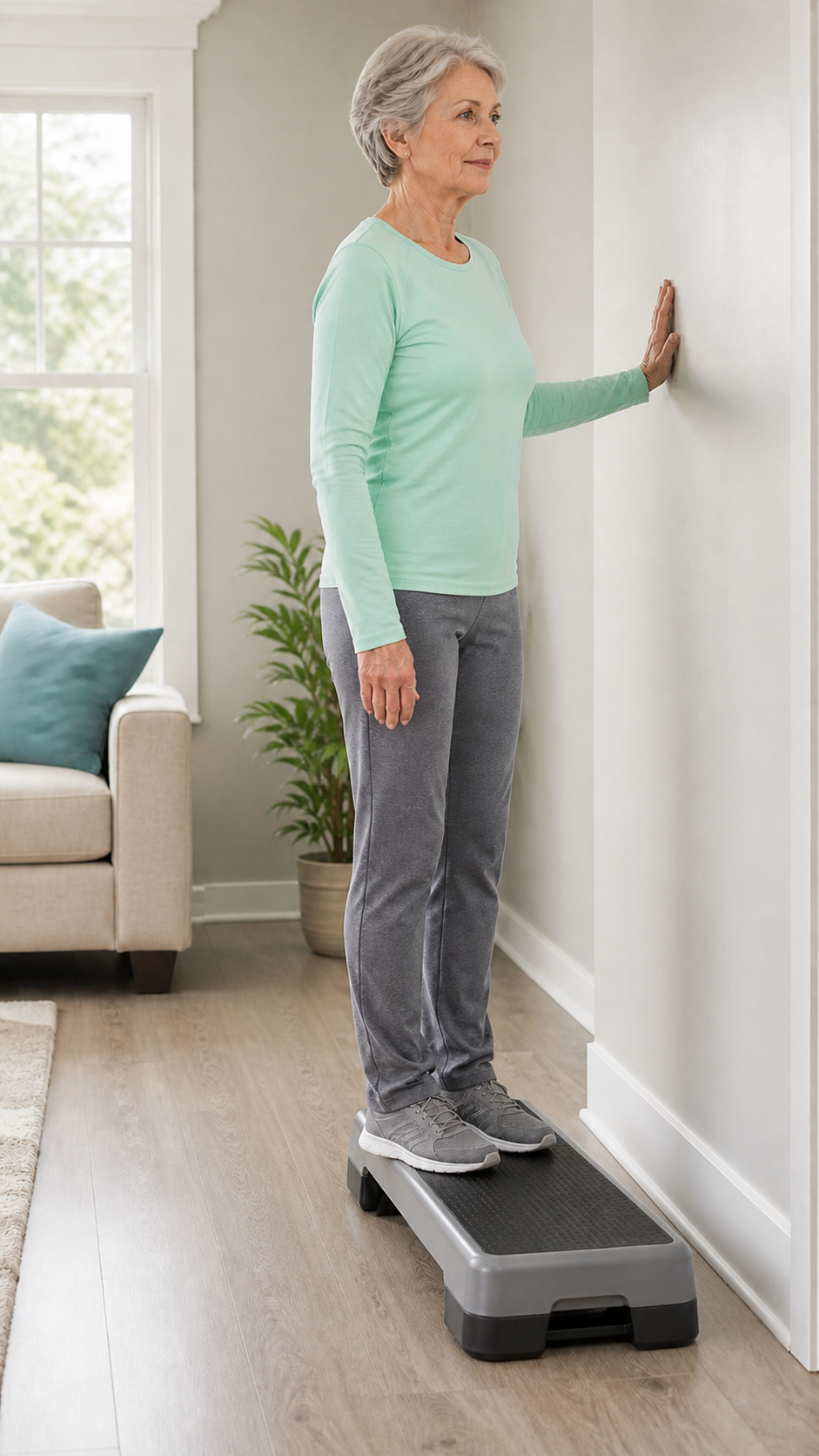
Minute 4: Low-step stepping
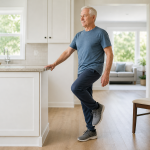
Use a stable, low aerobic step on a nonslip surface. Keep a wall or sturdy support within reach. Place one entire foot on the platform, press through that foot, and bring the other foot onto the step. Step backward down carefully and alternate the leading foot when appropriate. Never use a loose stool, box, or unstable object.
A simple timer
- 0:00–0:30: Wall push-up
- 0:30–1:00: Recovery
- 1:00–1:30: Chair stands
- 1:30–2:00: Recovery
- 2:00–2:30: Seated band rows
- 2:30–3:00: Recovery
- 3:00–3:30: Low-step stepping
- 3:30–4:00: Recovery and slow breathing
Finish with a short cool-down
After the four-minute routine, allow another two to three minutes for your breathing and heart rate to settle gradually. Walk slowly or march gently in place, then stand or sit comfortably while taking calm, unforced breaths. Gentle calf, chest, or shoulder stretches may feel good, but avoid bouncing or forcing a stretch.
Do not stop suddenly and rush into another demanding activity if you feel winded. If dizziness, chest discomfort, unusual shortness of breath, or pain does not settle promptly, seek medical guidance.
Remember: the optional warm-up and cool-down add approximately four to six minutes. They are safety-focused additions and were not counted as part of the study’s four-minute exercise routine.
Important safety considerations
The study participants did not receive only a list of exercises. They received equipment, demonstrations, reminders, and coaching. Speak with your physician or physical therapist before trying the routine if you have recently fallen, frequently lose your balance, recently had surgery, have a heart condition or uncontrolled blood pressure, or have significant joint, back, or bone pain.
Stop immediately for chest pain, dizziness, unusual shortness of breath, or new sharp pain. Use a nonslip surface, a stable chair, and secure support when needed.
What the study does not prove
The study was relatively small, lasted 12 weeks, and specifically included older adults who already had difficulty walking a quarter mile. It did not establish that four minutes provides all the activity needed for cardiovascular health, endurance, flexibility, or body-composition changes.
Think of this routine as a manageable beginning—not a replacement for a complete activity plan. Four focused minutes can help you practice movements that matter in daily life: pushing, standing, pulling, stepping, and balancing.
Sources
- Brief daily functional strength training to improve functional performance in older adults with mobility disability: a randomized trial, PLOS One, 2026.
- Penn State: Four-minute daily workout improves strength and balance in older adults.
- Penn State College of Medicine exercise demonstration videos.
Medical note: This article is for general educational purposes and is not a substitute for individualized medical advice, diagnosis, physical therapy, or treatment.