Practical guidance for living healthier, aging well, and becoming more of who you want to be.


A dance floor can look intimidating from the doorway. Everyone else seems to know the steps, the music moves quickly, and it is easy to imagine being the only beginner in the room. In reality, beginner dance classes are designed for people who are still learning where their feet go.
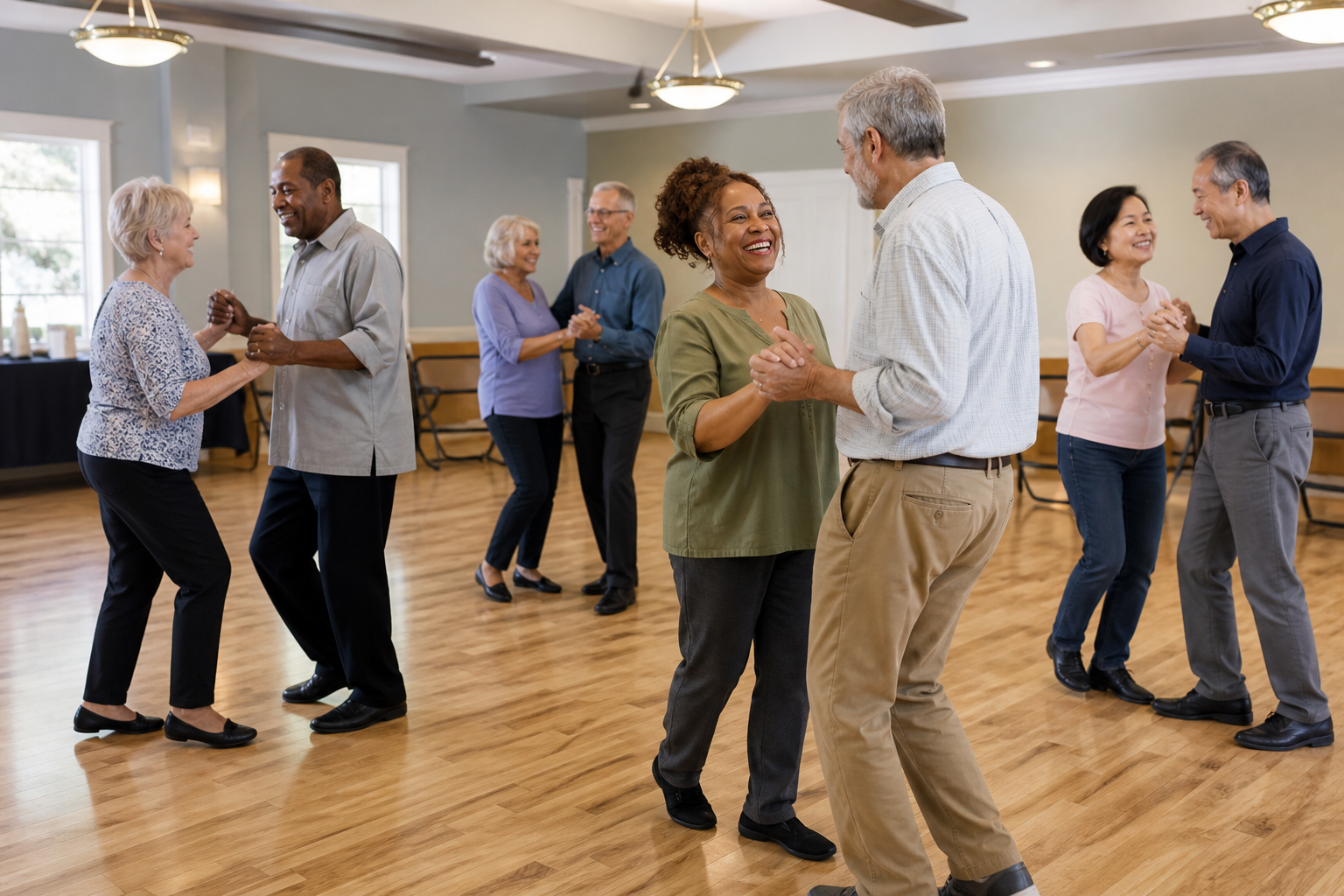
Social dancing can be a lively hobby because it combines several experiences at once: music, aerobic movement, balance, learning, and human connection. The National Institute on Aging includes dancing among activities that can support an active and engaged life, while federal physical-activity guidance recognizes ballroom dancing as a multicomponent activity.
Choose a style that fits your personality
Line dancing offers repeated patterns without requiring a partner. Ballroom classes introduce structured dances such as waltz, foxtrot, and rumba. Swing and salsa tend to feel more energetic, while folk and cultural dance groups often emphasize community.
Watch a beginner session before enrolling. Notice the pace, music volume, floor surface, class size, rest breaks, and whether the teacher offers easier versions of steps.
You may not need a partner
Many classes rotate partners or welcome solo participants. Ask before registering so you know what to expect. If rotating partners feels uncomfortable, look for line dance, individual rhythm, or “no partner required” sessions.
The social part can begin before the music. Arrive early, introduce yourself to the instructor, and tell another beginner that it is your first class. Familiar faces make the second visit easier.
Start with the floor and footwear
Wear shoes that stay securely on the foot and allow controlled turning. Very sticky soles can strain knees during pivots, while slippery soles increase fall risk. Ask the instructor what is appropriate for the floor.
A well-run class should have good lighting, a clear floor, stable chairs or railings nearby, and enough room between dancers. Avoid carrying a bag or loose clothing that can catch on another person.
Learn at your own intensity
Use the “talk test”: moderate activity usually lets you talk but not sing comfortably. Take breaks before you are exhausted. Smaller steps, fewer turns, and a slower tempo still count as dancing.
People with balance concerns, joint replacements, heart conditions, or recent injuries may want advice from a clinician or physical therapist before beginning. Tell the instructor about movements you need to modify, but you do not owe the class a detailed medical history.
Make progress without chasing perfection
At home, practice one short sequence near a stable support—not an entire routine. Count the rhythm, repeat the basic step, and stop before fatigue changes your form.
Use three goals for the first month:
- Attend consistently.
- Learn one basic pattern well enough to enjoy the music.
- Speak to one new person each class.
Protect hearing and comfort
Some dance venues are loud. If you need to raise your voice to speak to someone close by, consider musician-style earplugs and take quiet breaks. Confirm that the venue has seating, water, restrooms, and a safe route to the parking area.
The point of social dancing is not to perform every step flawlessly. It is to move with music, learn something new, and share the experience with other people. A beginner class with the right pace can turn an unfamiliar dance floor into a place you look forward to returning to.
Sources
- National Institute on Aging, Participating in Activities You Enjoy as You Age: https://www.nia.nih.gov/health/participating-activities-you-enjoy
- CDC, What Counts as Physical Activity for Older Adults: https://www.cdc.gov/physical-activity-basics/adding-older-adults/what-counts.html
- U.S. Department of Health and Human Services, Physical Activity Guidelines for Americans, 2nd edition: https://health.gov/sites/default/files/2019-09/Physical_Activity_Guidelines_2nd_edition.pdf
This article is for general educational purposes and is not medical advice.
Where to Find This Activity Near You
Use your city, state, or ZIP code on the sites below to find nearby facilities, groups, classes, and events:
- Meetup — Find beginner-friendly dance groups
- Eventbrite — Search local dance lessons and social events
- YMCA — Check nearby group classes
Before attending, confirm the current schedule, cost, accessibility, beginner level, equipment needs, and cancellation policy directly with the organizer. More to Become does not operate or endorse individual groups or events.