
Practical guidance for living healthier, aging well, and becoming more of who you want to be.


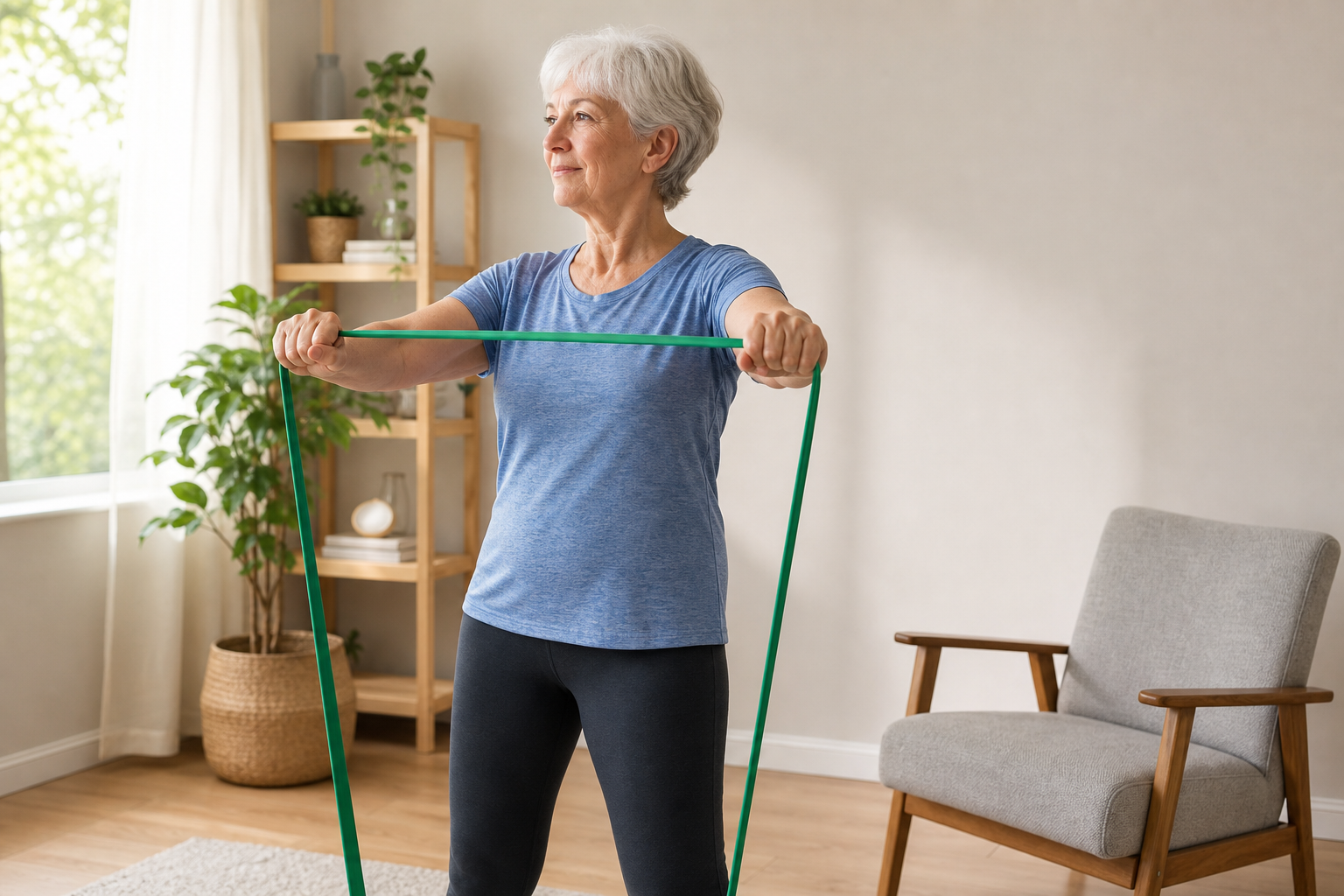
Losing strength is not an unavoidable price of getting older. Muscle does tend to change with age, especially during long periods of inactivity, but research consistently shows that older adults can still become stronger.
That matters for reasons that have little to do with appearance. Strength helps you rise from a chair, carry groceries, climb stairs, recover your balance, travel with confidence, and keep doing ordinary tasks without assistance.
What the research shows
A review of randomized trials involving adults age 75 and older found that resistance training improved muscle strength and produced a smaller but significant increase in whole-muscle size. Benefits were also seen among participants over 80. A larger 2025 analysis of 151 randomized trials concluded that even relatively low-volume resistance training can improve physical function and lean body mass in older adults.
The practical message is encouraging: you do not need a bodybuilding program to benefit. Consistent, appropriately challenging exercise matters more than an intimidating routine.
What counts as strength training?
Strength training means working your muscles against resistance. That resistance might come from:
- Your body weight
- Resistance bands
- Dumbbells or household objects
- Weight machines
- Everyday tasks such as carrying groceries or repeatedly standing from a chair
The movement should feel challenging by the final few repetitions while still allowing controlled form. Pain is not the goal.
A realistic twice-weekly starting plan
The U.S. Physical Activity Guidelines recommend muscle-strengthening activity on at least two days each week. Beginners can start with a short routine covering major muscle groups:
- Sit-to-stand from a sturdy chair
- Wall or counter push-ups
- Resistance-band rows
- Supported heel raises
- A light carry, using weights that feel secure
Begin with one set of roughly 8 to 12 controlled repetitions. Rest as needed. When the final repetitions become easy and your form remains steady, add a little resistance, another repetition, or a second set.
Progress without rushing
Muscles need a reason to adapt, but progress does not have to be dramatic. Small changes made over several weeks are safer and more sustainable than suddenly doubling the weight.
Track one useful measure: the number of controlled chair stands you can perform, the resistance-band color you use, or the weight you can carry comfortably. Improvement in daily life may appear before a visible physical change.
Safety comes first
Use a stable chair or counter when balance is uncertain. Avoid holding your breath; exhale through the harder part of the movement. Stop if you experience chest pain, severe shortness of breath, faintness, or sudden joint pain.
If you have recently had surgery, have unstable heart disease, severe osteoporosis, uncontrolled blood pressure, or a condition that affects balance, ask a clinician or physical therapist how to begin safely.
The bottom line
Strength is trainable well into later life. A short routine performed consistently can support the physical abilities that make independence possible. Start with movements you can control, give your body time to adapt, and build gradually.
Sources
- Effects of Resistance Training on Muscle Size and Strength in Very Elderly Adults
- Effects of Resistance Training Volume in Older Adults
- Physical Activity Guidelines for Americans, 2nd edition
This article provides general educational information and is not a substitute for personalized medical advice.